
How to Track Teacher Grants
Watch Video
Some organizations grant money to individuals to spend over the course of a financial year. A common example is the small grants given to teachers for classroom materials and projects.
MoneyMinder makes it easy to track and manage these types of grants.
We’ll start by giving each of these contacts a Reimbursement Activity Account.
Add Reimbursement Activity Accounts
Click Contacts in the sidebar.
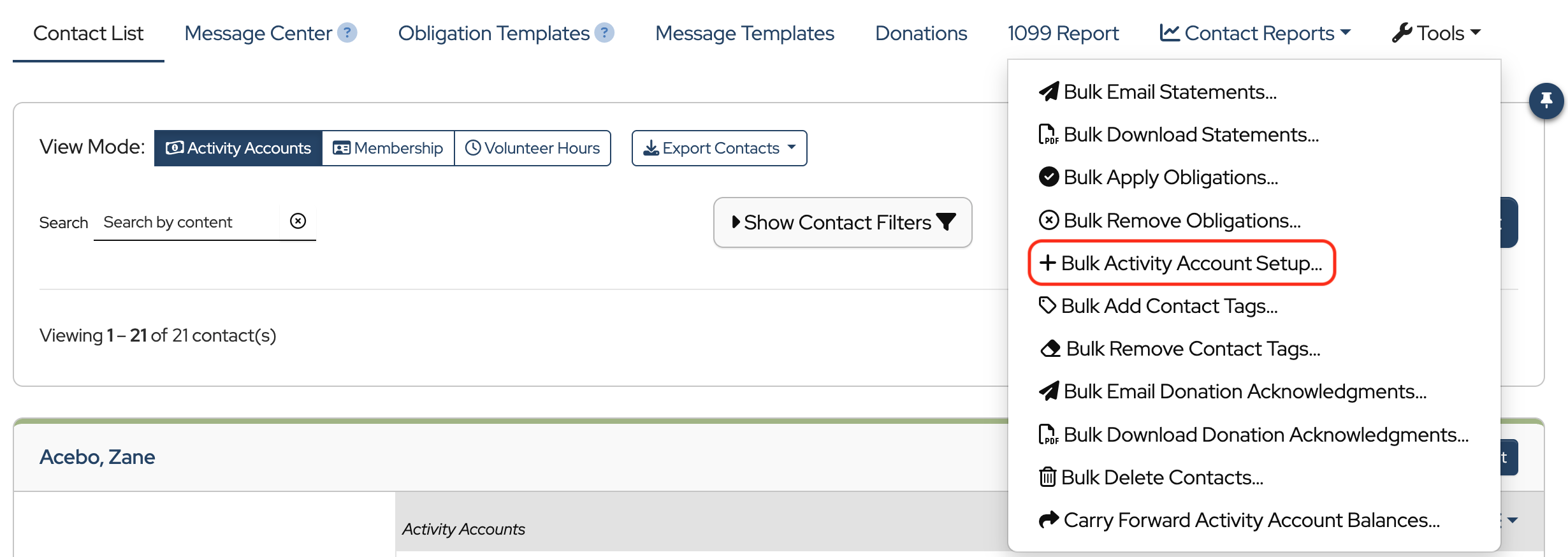
Then click Tools and choose Bulk Activity Account Setup from the dropdown.
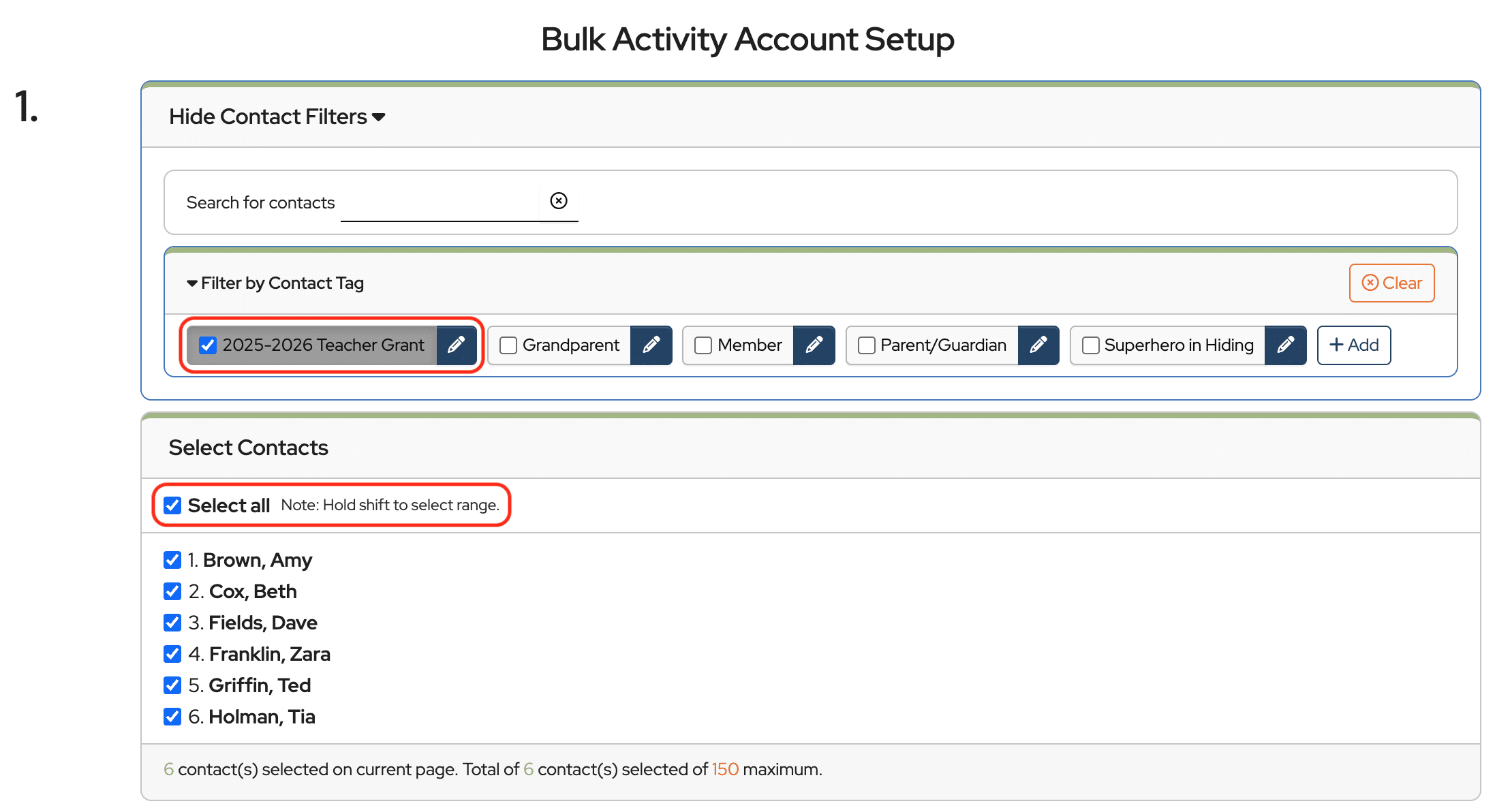
Select the contacts who will receive the grants. You may want to add tags to make it easier to filter grant recipients.
Next, select Reimbursement Activity, then click Create Activity Accounts.
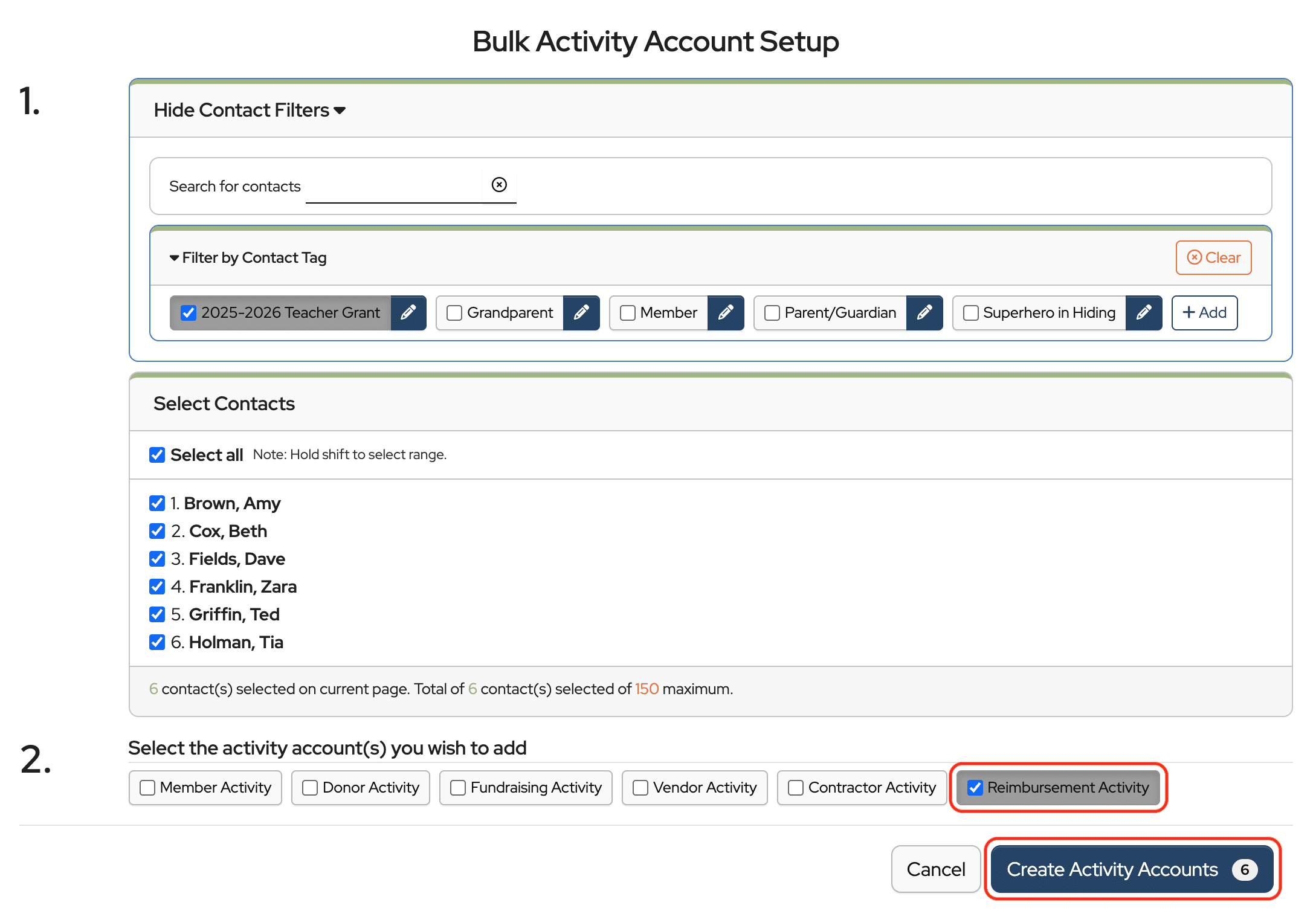
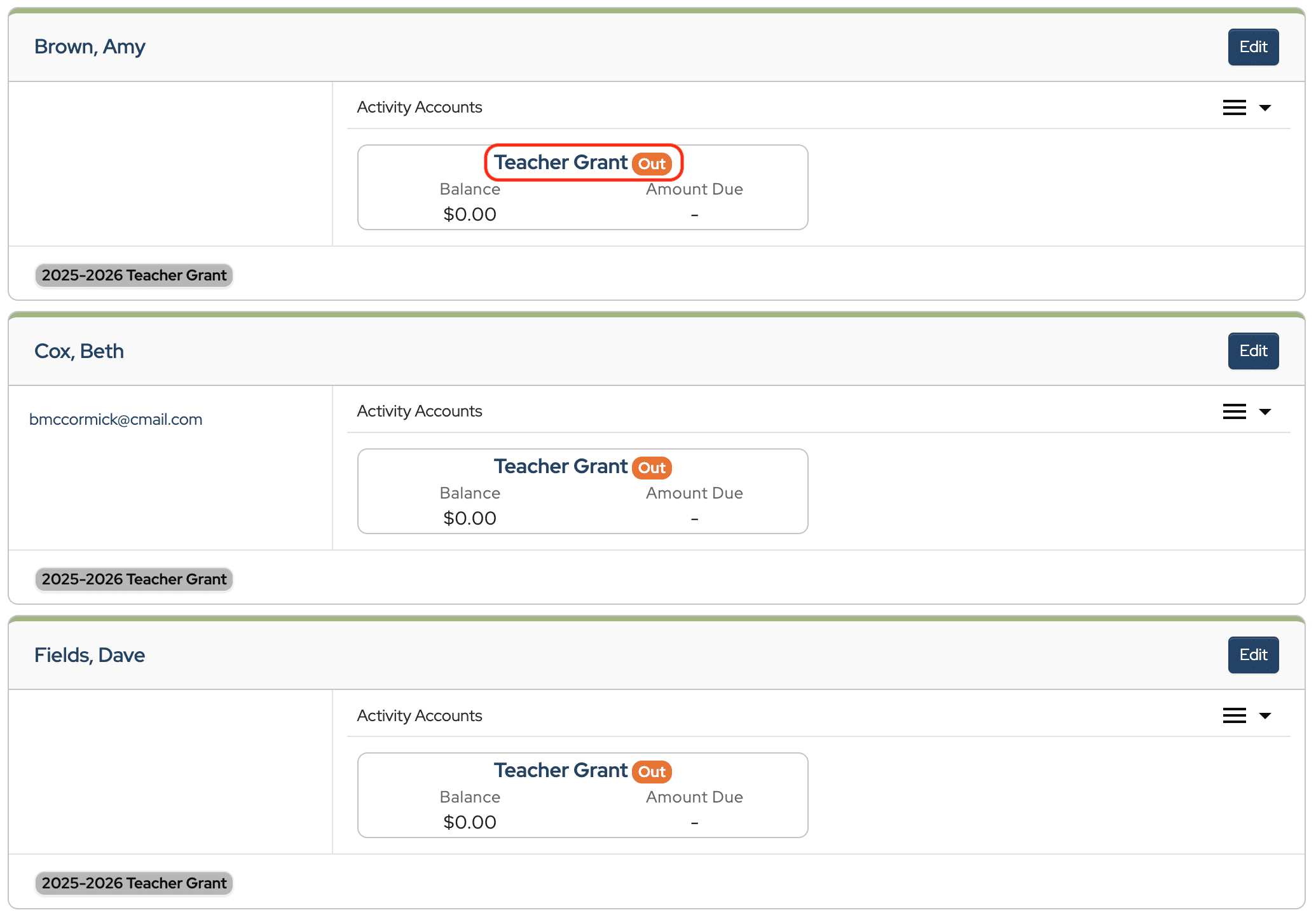
This will add Reimbursement Activity Accounts to all of the selected contacts. You can rename the activity account to something like Teacher Grant or Teacher Allocation. In this example, we’ll use Teacher Grant.
Create Teacher Grant Obligation Template
Now let’s create an obligation template for the grant amount.
Click the Obligation Templates tab, then click Add New Template.

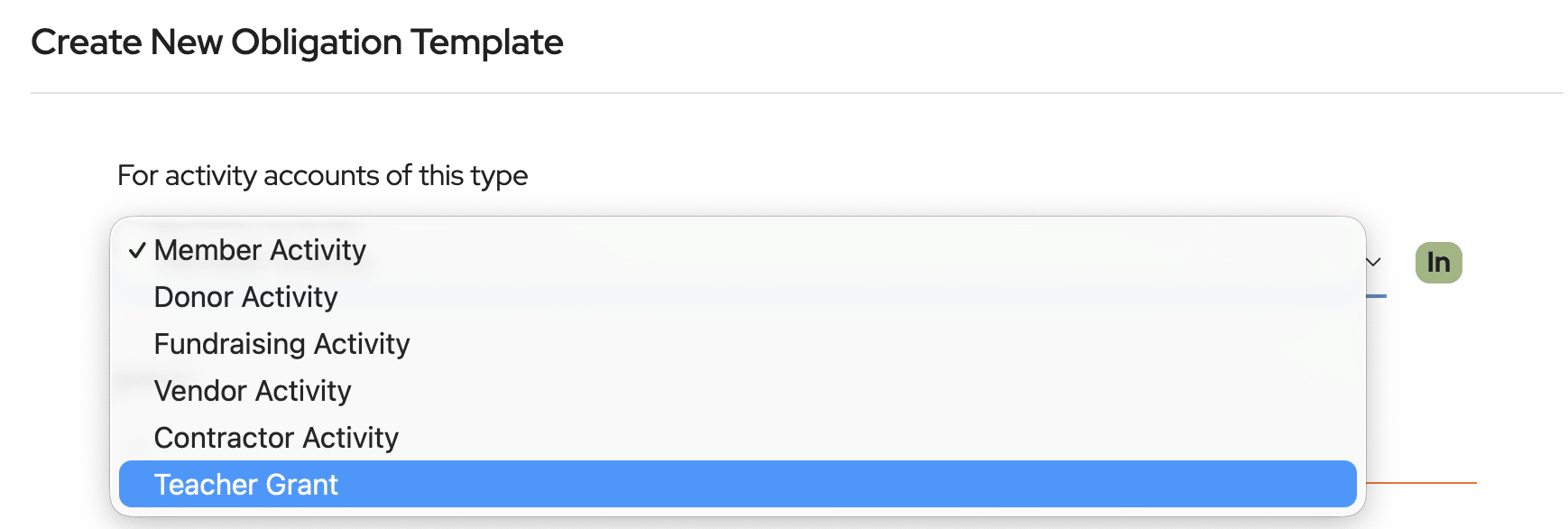
In the Activity Account dropdown, select Reimbursement Activity Account – Teacher Grant in this case.
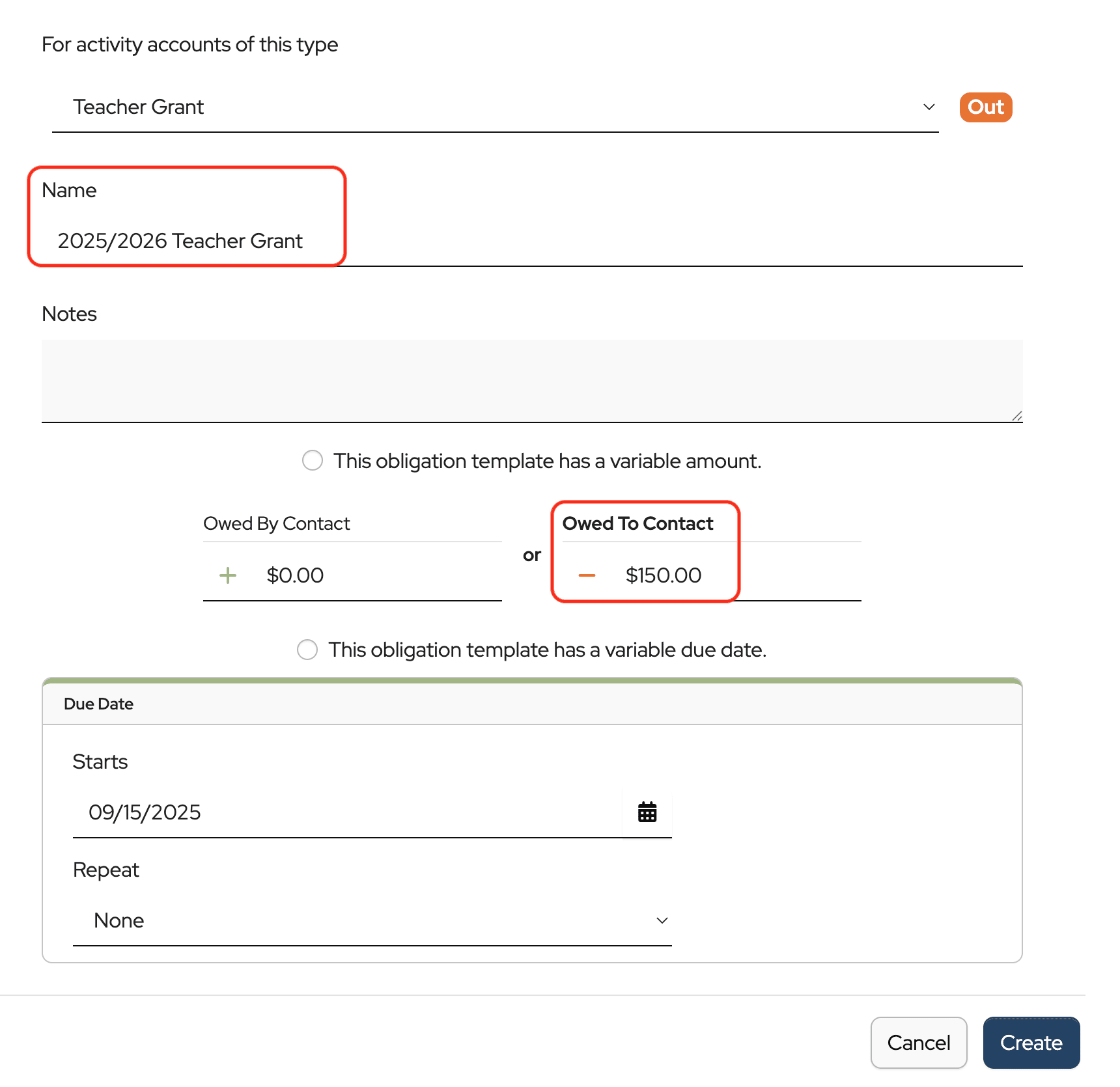
Enter a name for the obligation along with the grant amount. The amount will go in the Owed to Contact field since its money being granted to the teachers.
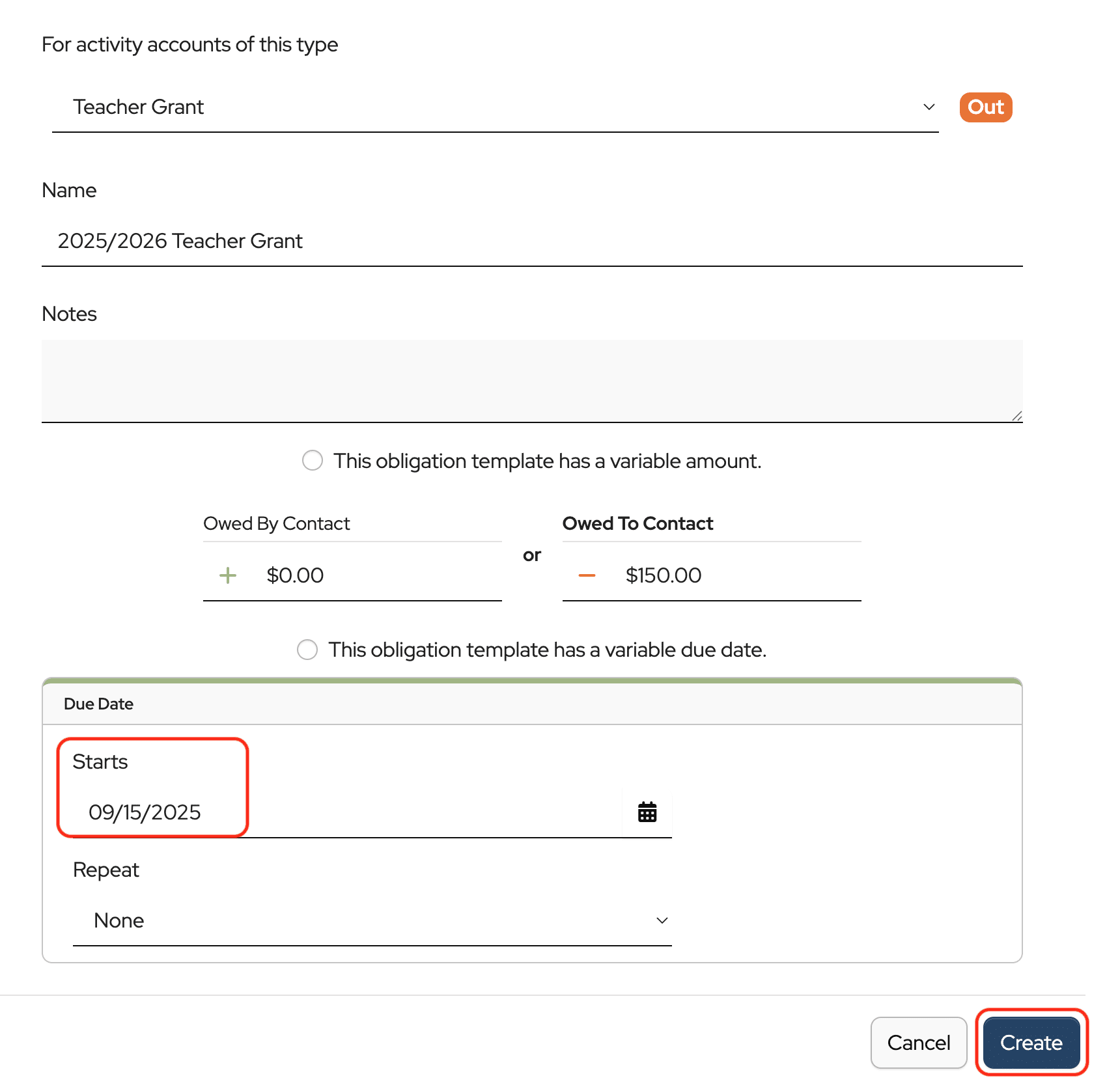
Enter a start date then click Create.
Apply the Teacher Grant Obligation Template
Now it’s time to apply this template to your contacts.
Click Tools again and choose Bulk Apply Obligations from the dropdown.
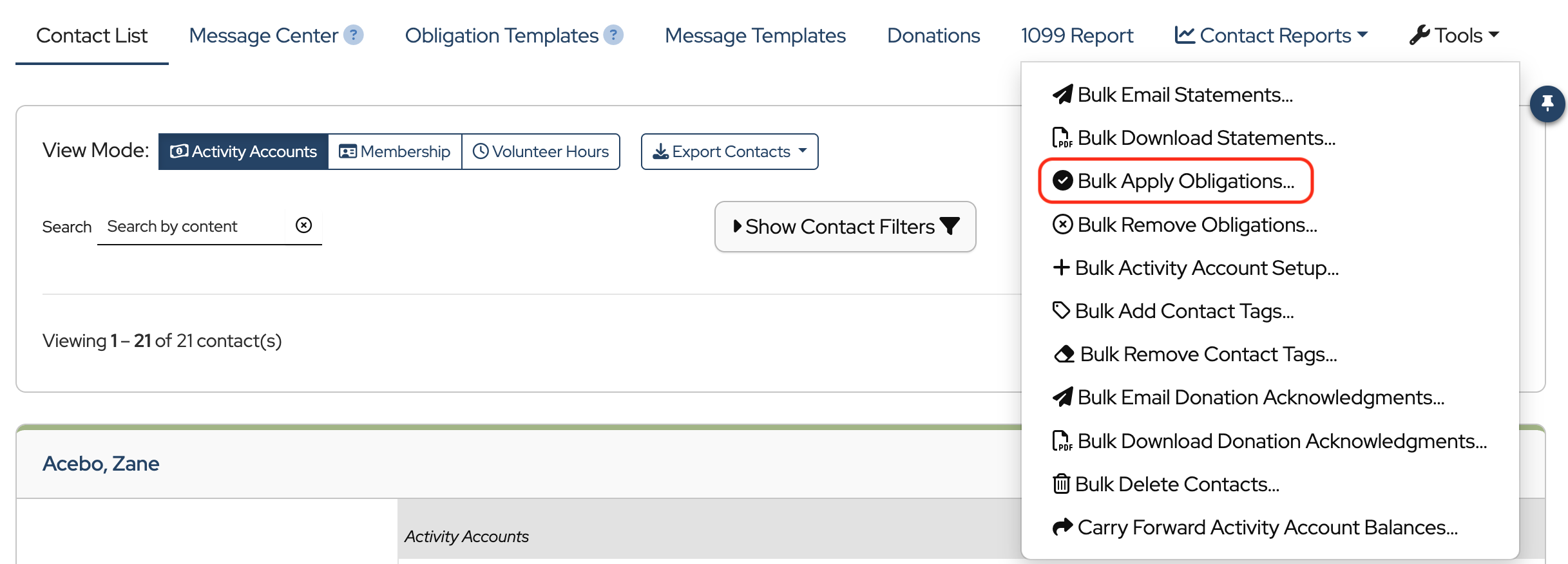
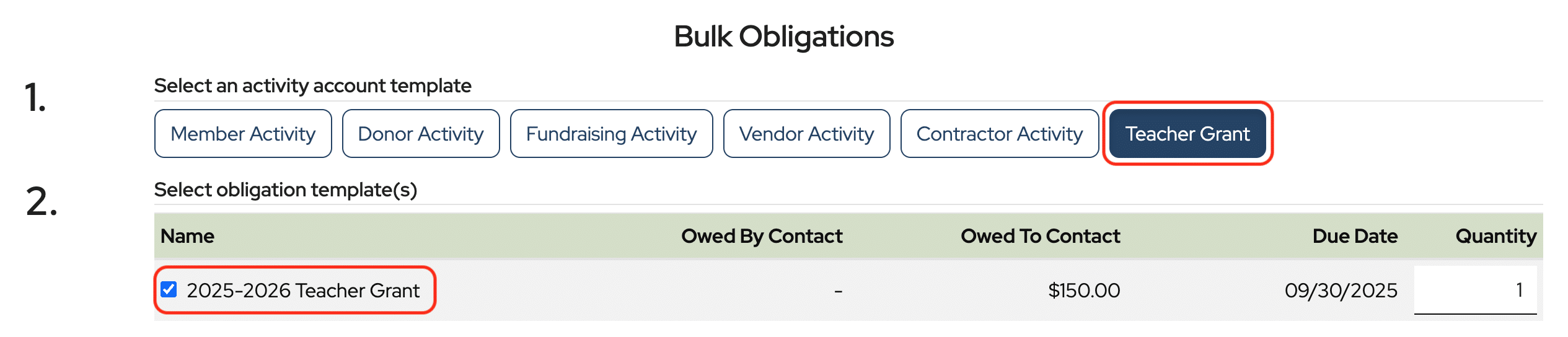
Next, select the Teacher Grant activity account, and then the obligation template you just created.
Select contacts by clicking Select All. You can deselect any contacts you don’t want to include.
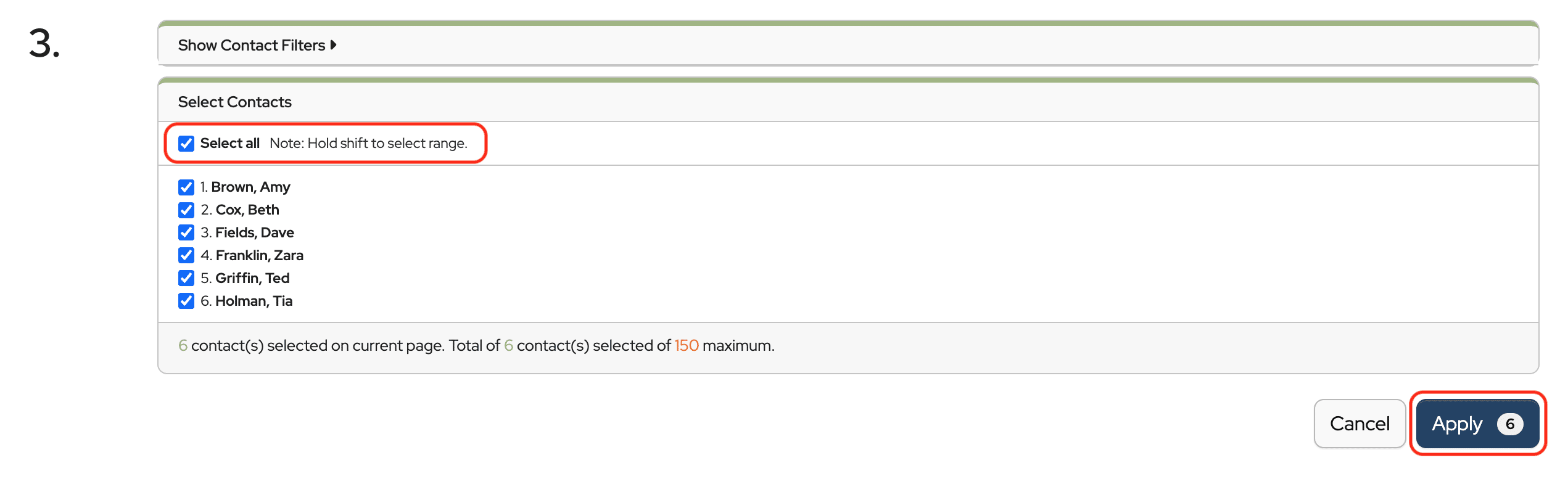
Click Apply to apply the grant amount to the selected contacts.
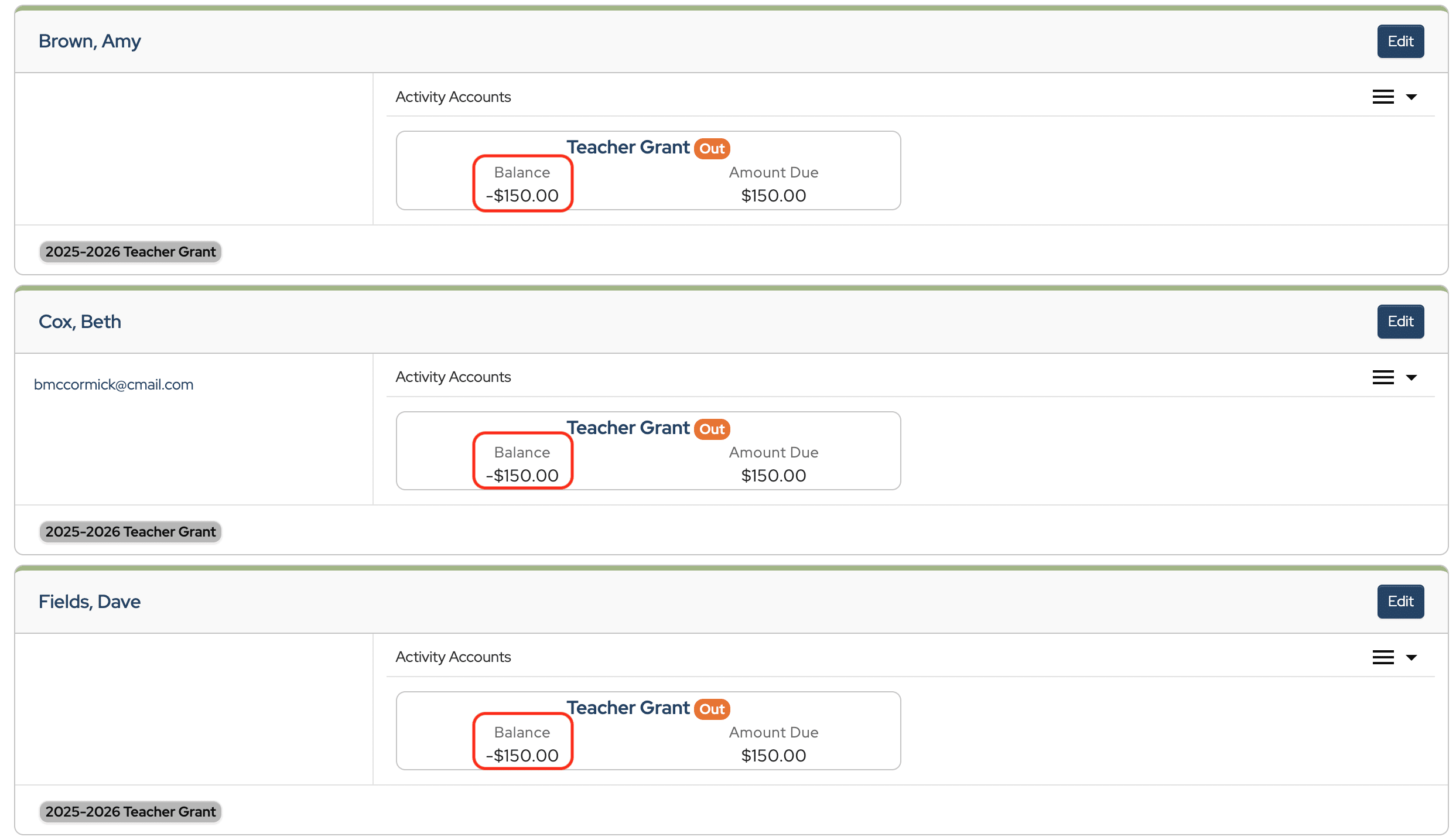
Each contact will now have a credit balance in their Teacher Grant accounts.
Apply Purchases to Teacher Grant
When money is spent against a contact’s credit, it’s recorded in the bank register as a withdrawal and applied to the contact.
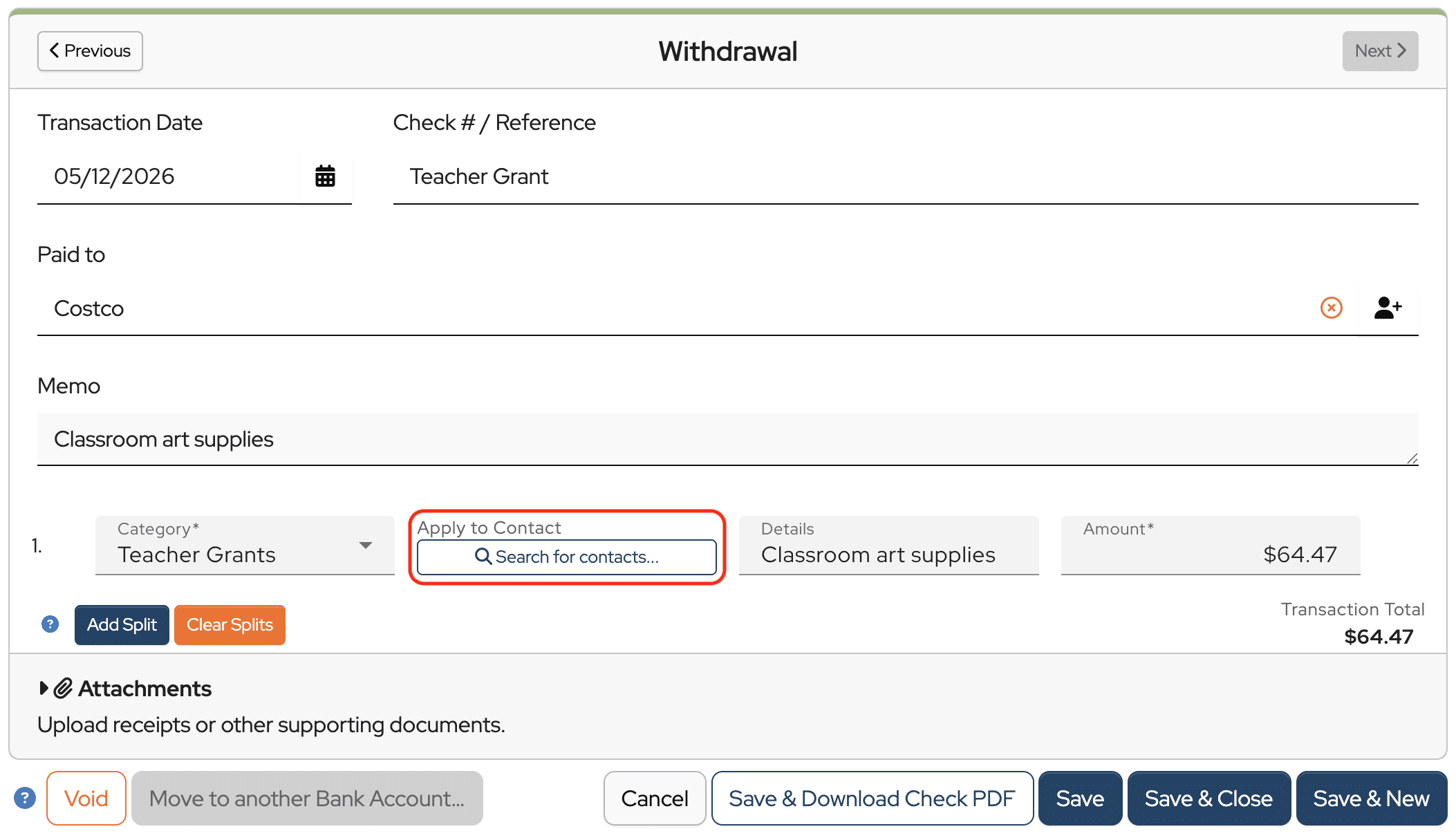
Here’s a withdrawal for classroom art supplies purchased for Amy Brown. To apply it to Amy’s account, click Search for contacts and enter her name into the Select a Contact field. Select her name from the dropdown when it appears.
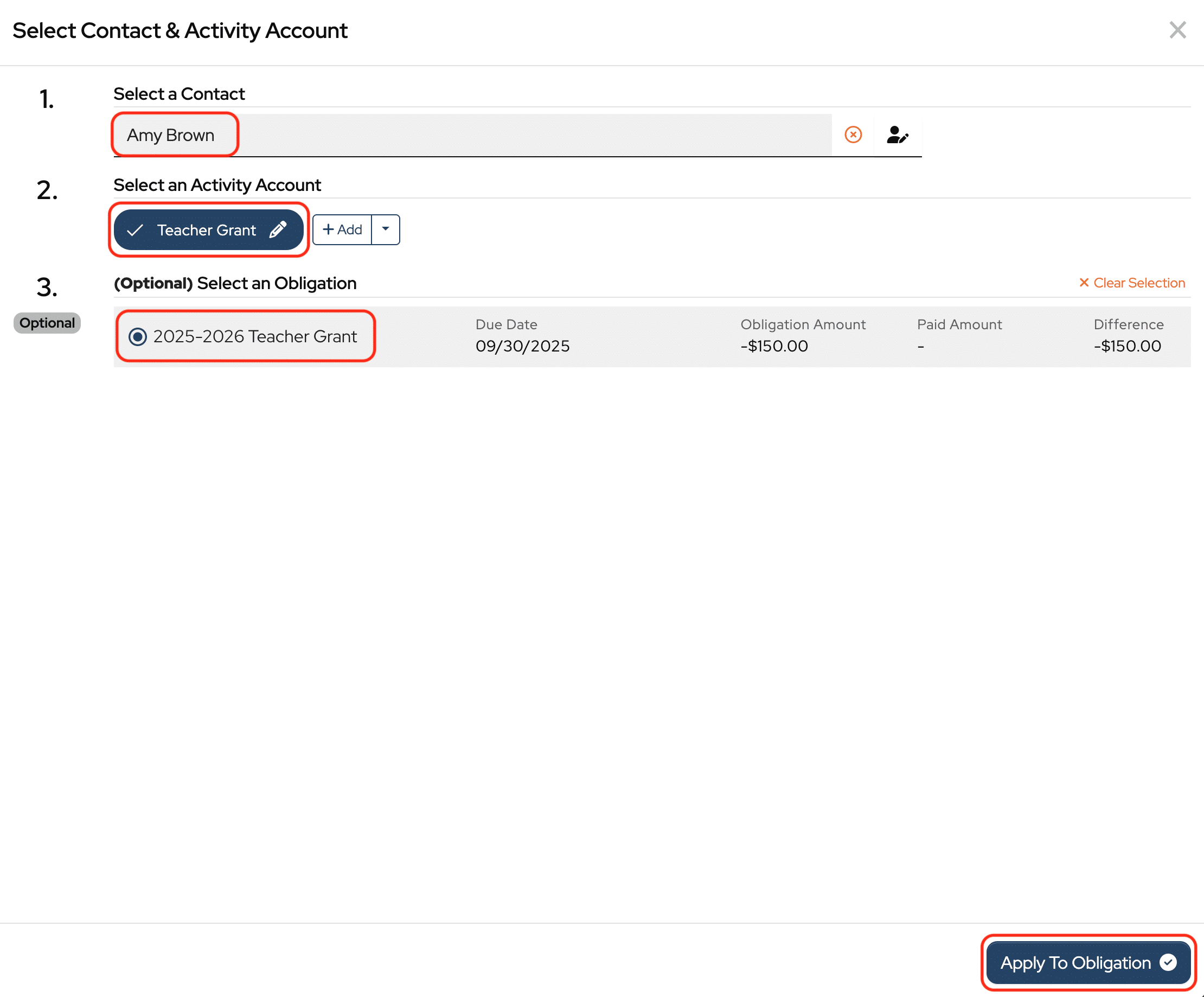
Click the Teacher Grants activity account and select the obligation, then click Apply to Obligation.
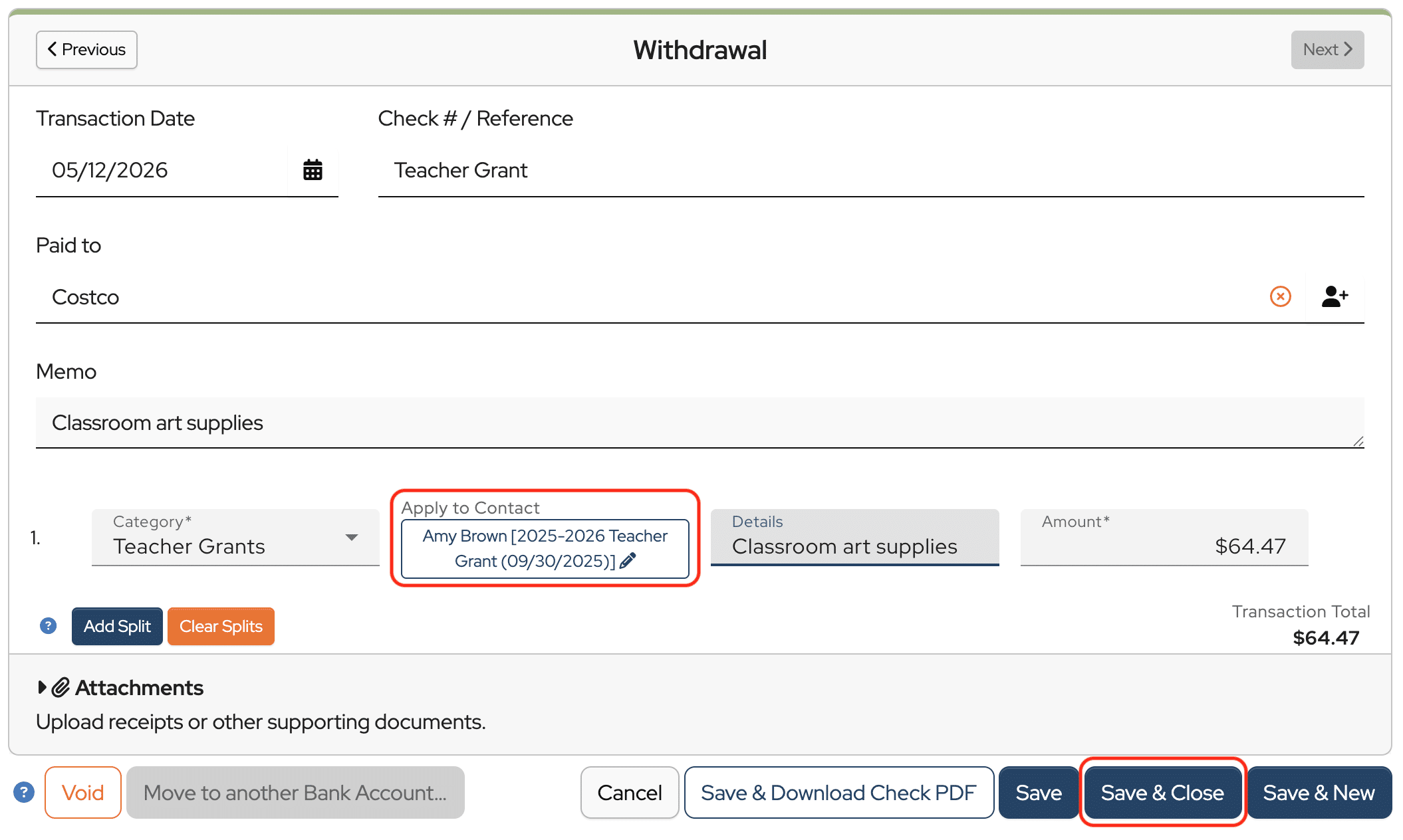
You’ll now see Amy’s name and the obligation listed under Apply to Contact in the transaction. Click Save & Close to record the withdrawal in both the bank register and Amy’s Teacher Grant account.
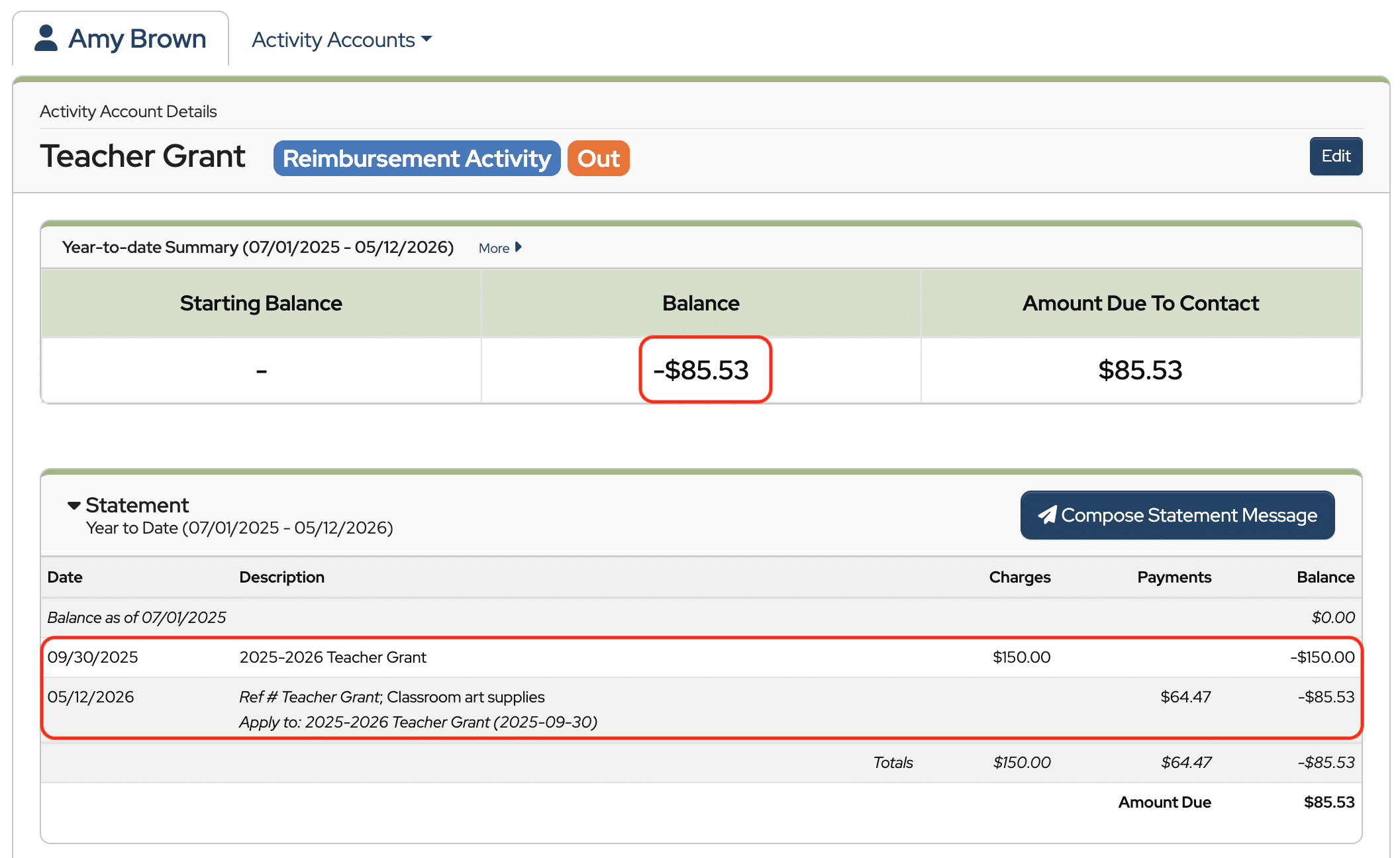
Now let’s take a look at Amy’s account.
You’ll see the credit balance has been reduced by the amount of the purchase. Amy can continue spending the balance down to zero.
Teacher Grant Obligation Report
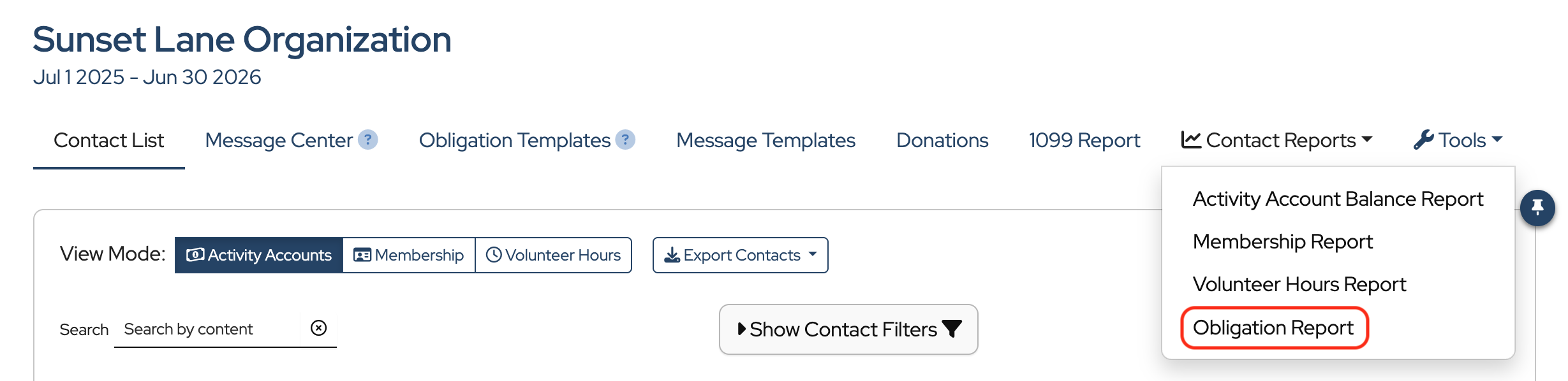
To see balances for each contact with a Teacher Grant, click Contact Reports and choose Obligation Report from the dropdown.
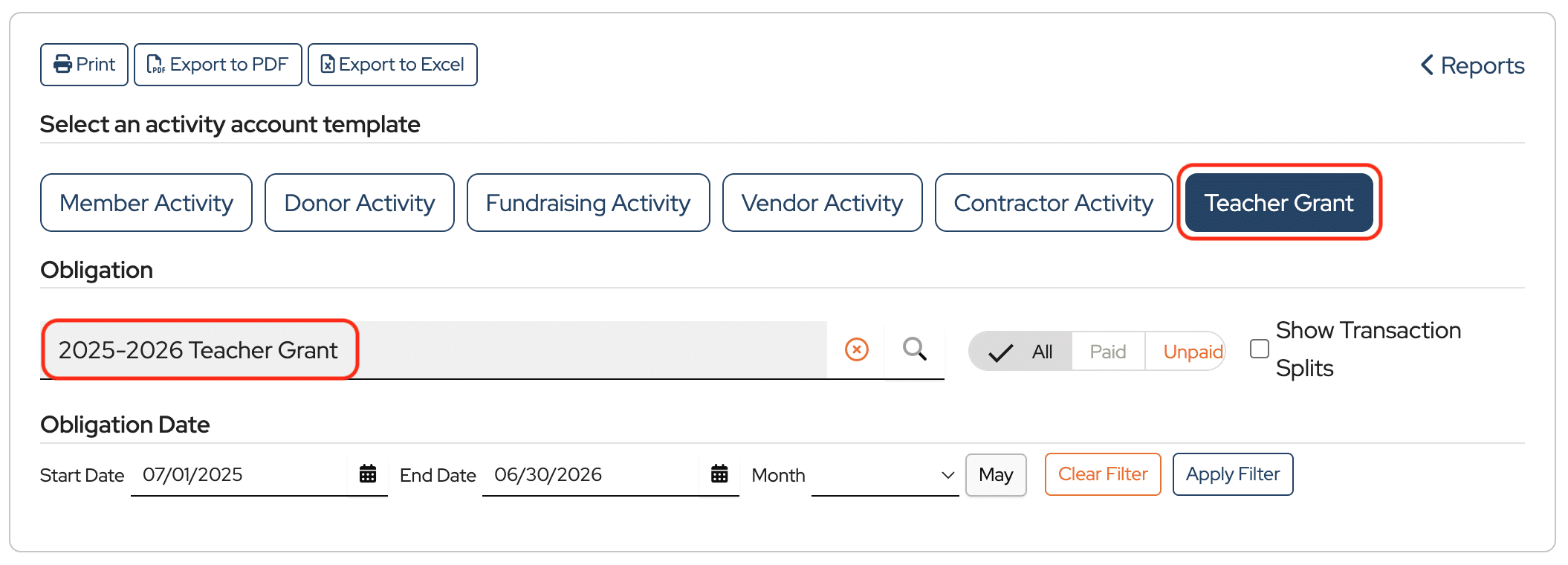
Select the Teacher Grant activity account then choose the grant obligation.
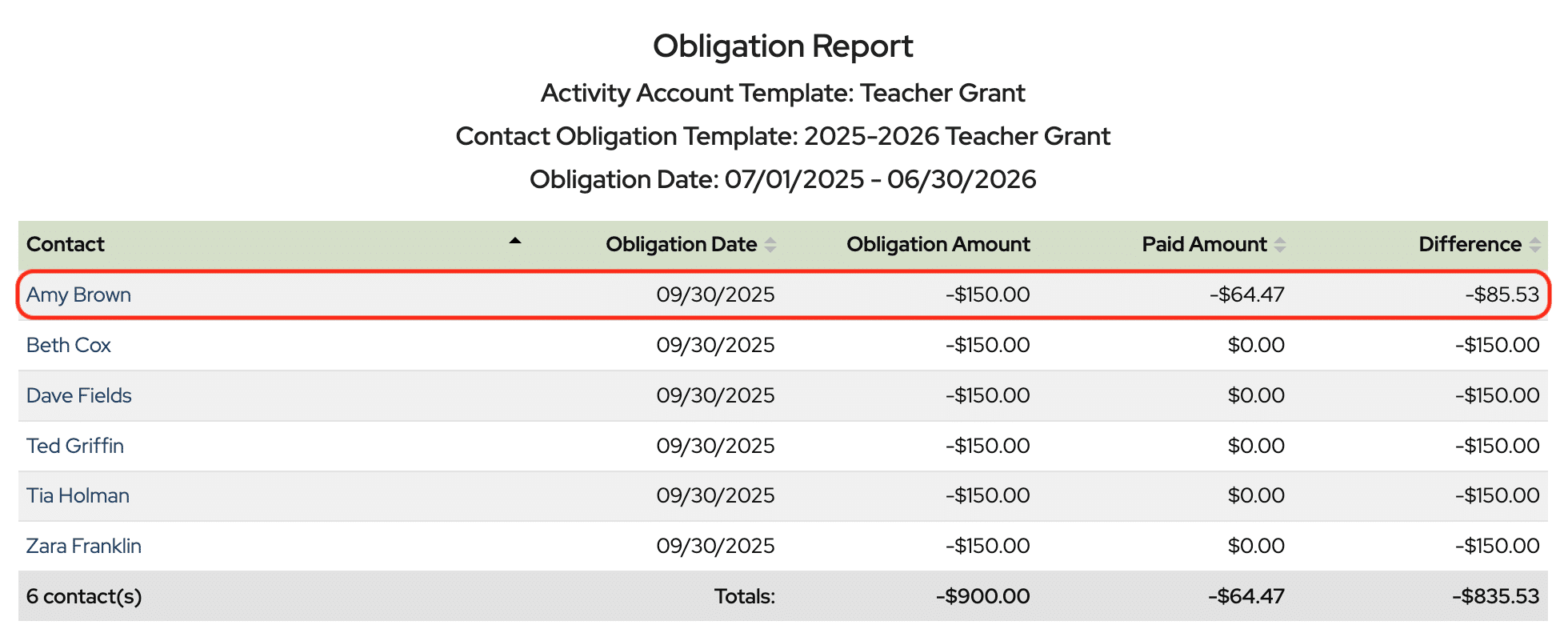
This report gives a clear overview of how much each teacher has spent and how much remains.
I really dislike that the amount due is in bold and does not show a negative sign. This could be deceiving to some teachers. I already had this issue. A teacher has over 300 left to spend her in her class account but, the statement looks confusing and she thinks she owes. Wish it was a bit for straight forward and more simple/different wording for the columns for PTO’s.
Hi Estella,
We appreciate your feedback. I will enter this as a feature request.
Hi again, Estella,
If you send statements to teachers, consider changing the Statement Table placeholder in the statement template. Choose “Statement Table—no Amount Due” to show the balance as a negative and not show the Amount Due at all. That may work better for you, so there isn’t confusion.