QuickStart Guide
Table of Contents
- Setting up Bank Register(s)
- Setting up a Budget
- Guidelines for importing your Contact list
- Enter Transactions & Attach Receipts
- View Some Reports
- How to Add Users
- Set Up a Custom Store
- Upload Documents
Join us for a live session built especially for new trial users — we’ll walk you through the essentials of getting set up, then open the floor for your questions.
1. Setting up Bank Register(s)
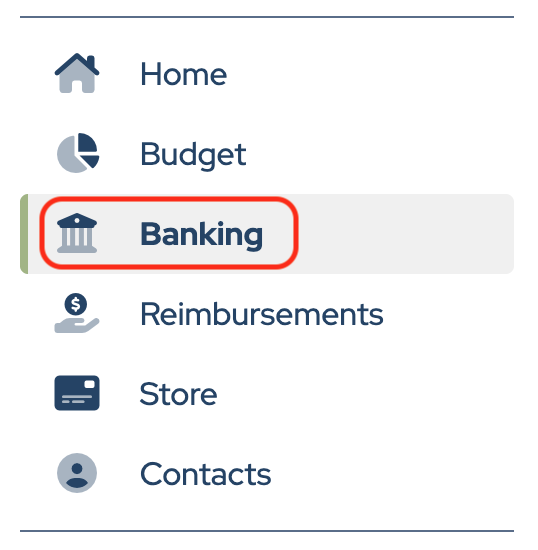
Click Banking in the sidebar.
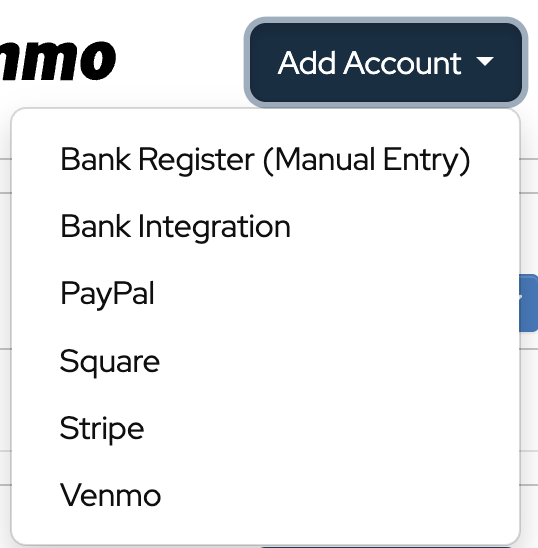
Click Add Account:

Choose which type of account to add from the dropdown:
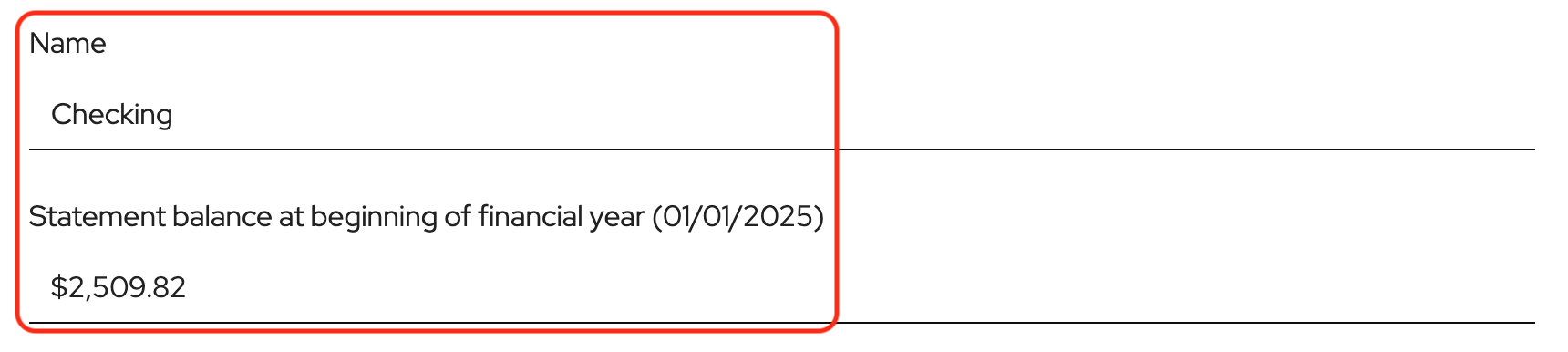
Enter the bank account name and statement balance at the beginning of the financial year. This should be taken directly from the bank statement.
Click Add Uncleared Deposit or Add Uncleared Withdrawal to enter outstanding deposits or withdrawals from the prior financial year that did not clear the bank by the start of the new financial year.
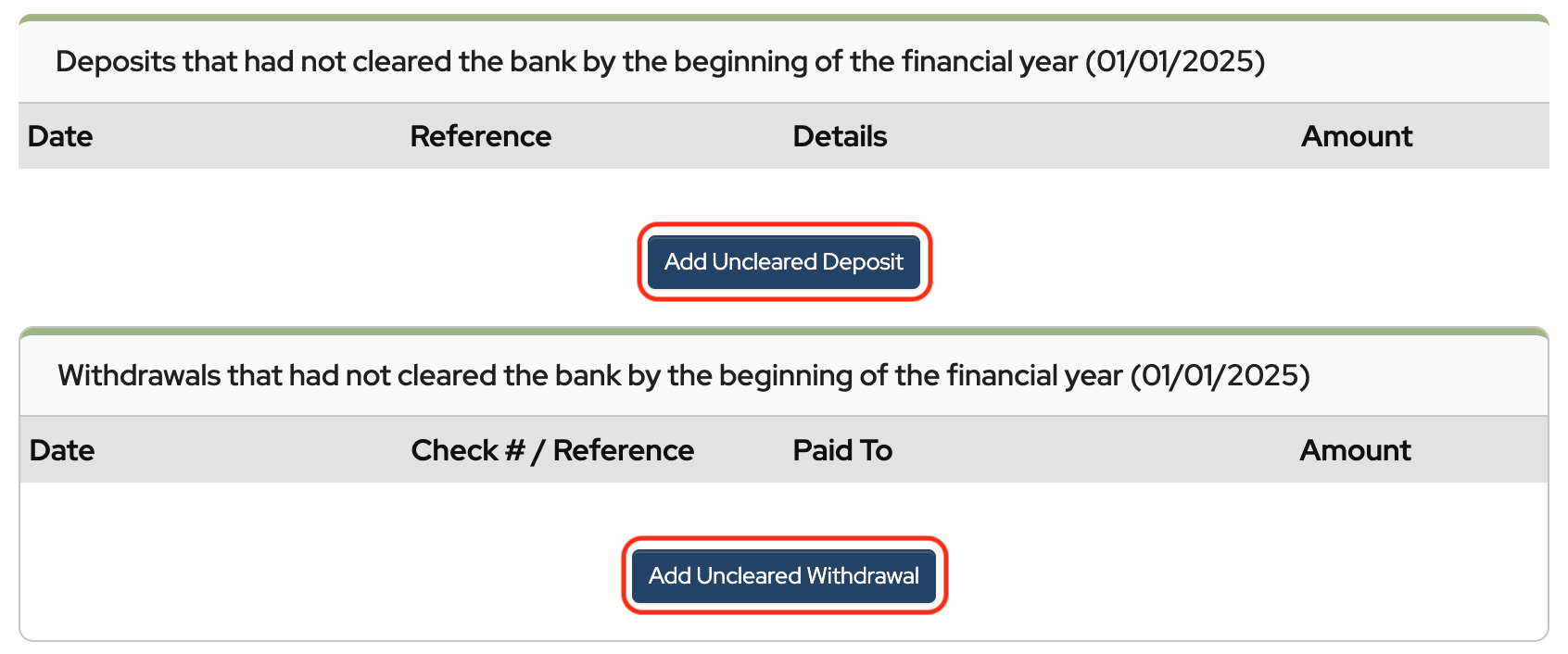
Note that entries made in this section do not affect current year numbers. They are placeholders for reconciliations in the new financial year. It is most transparent to enter the bank statement opening balance, which is easily verifiable, and then enter any known outstanding items to arrive at a true starting balance for the year.
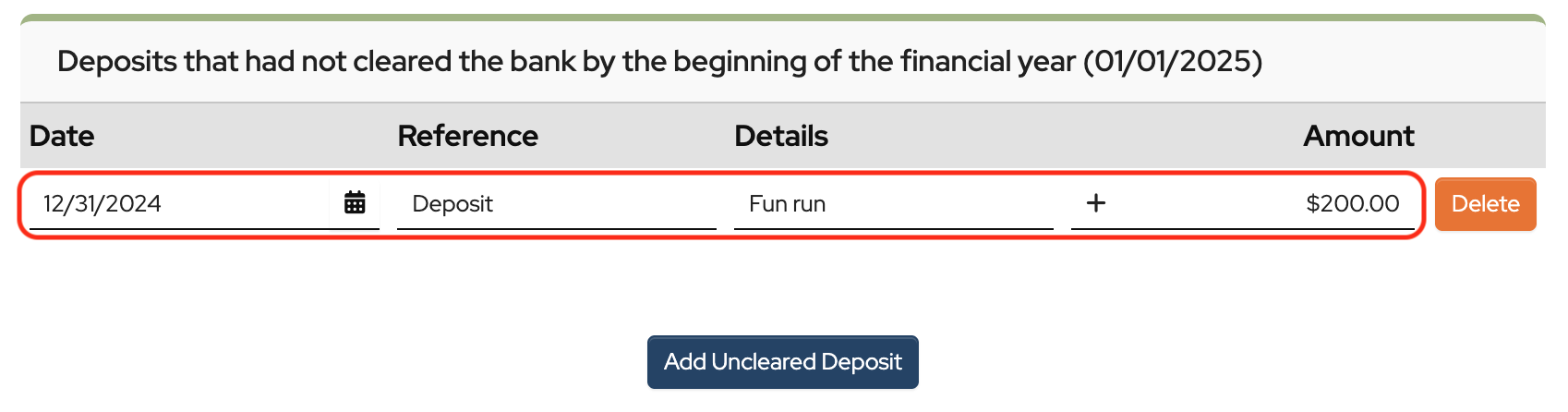
For uncleared deposits: Enter the date, reference information, details, and the amount. Continue to do this for every deposit that had not cleared the bank by the last day of the financial year.
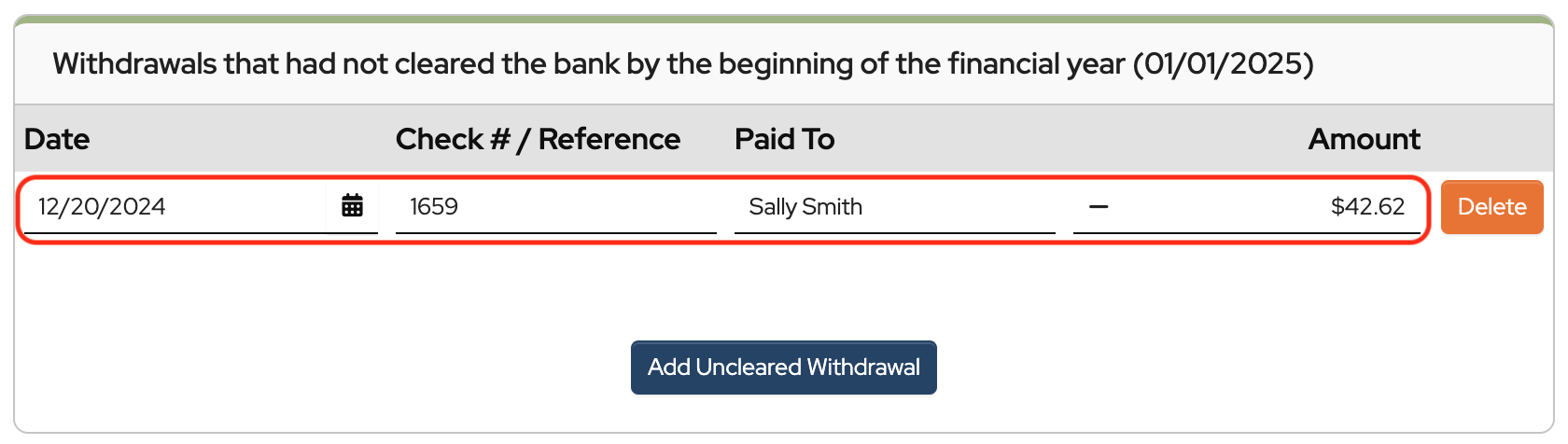
For uncleared withdrawals: Enter the date, check number or reference information, who it was paid to, and the amount.
When you’re finished adding uncleared transactions, click Save.
Account Integration
Connect your bank account to MoneyMinder and import transactions rather than manually enter them.
How to Import Bank Transactions
Importing bank transactions from a QFX, QBO, or OFX bank export
How to Link Merchant Accounts (PayPal, Square, Stripe)
How to Import Merchant Account Transactions
2. Setting up a Budget
Click Budget in the sidebar.
Choose one of the following to create a budget:
- Select one of MoneyMinder’s templates.
- Add a budget from scratch.
To select a budget template:
Select a budget template from the Choose a MoneyMinder budget template to start with drop-down.
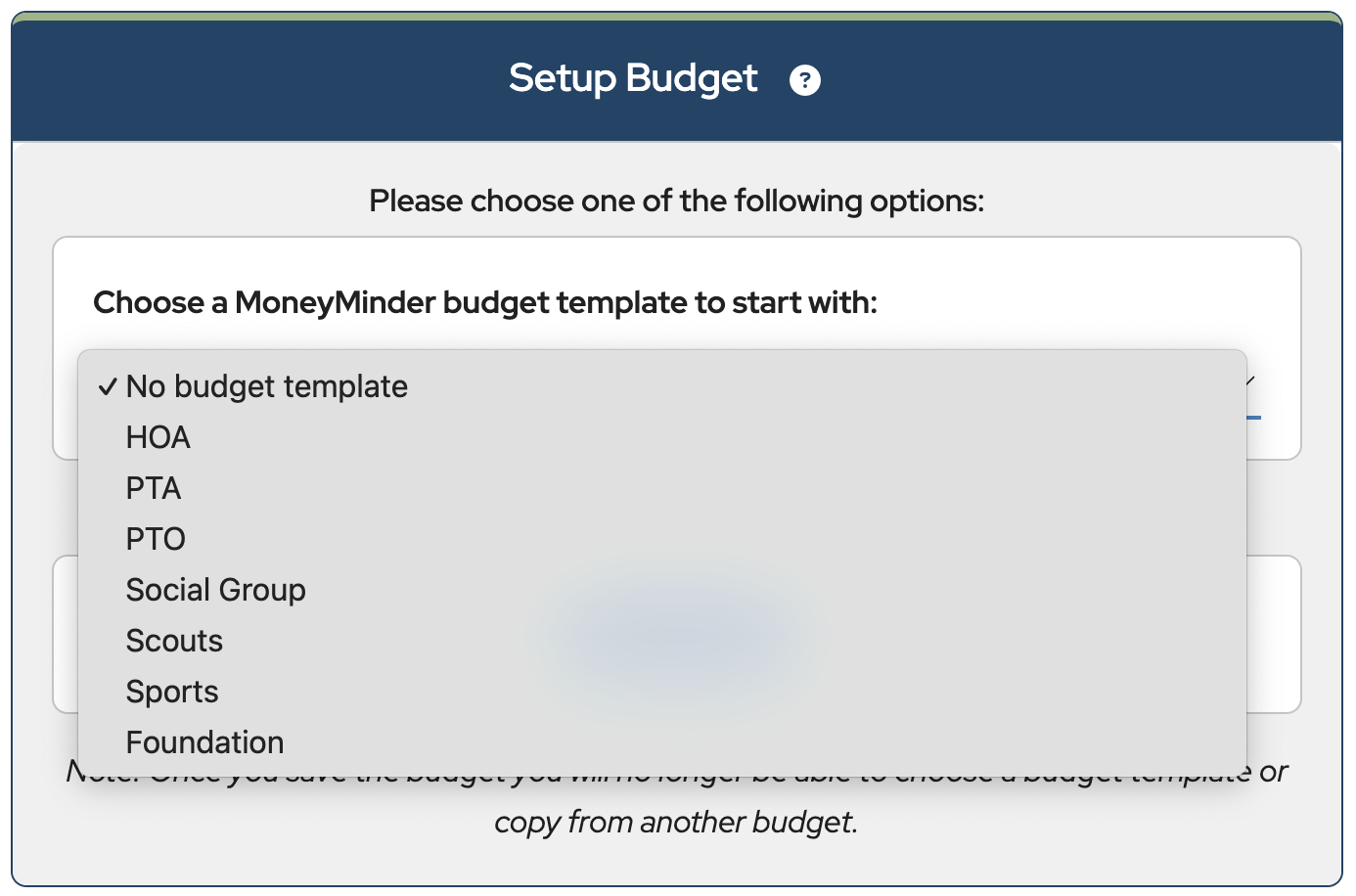
A sample budget will auto-populate. Changes to the template can be made to modify the budget for your group.
When finished, click Save Changes.

To add a budget from scratch:
Click Start New Budget to begin creating a new budget.
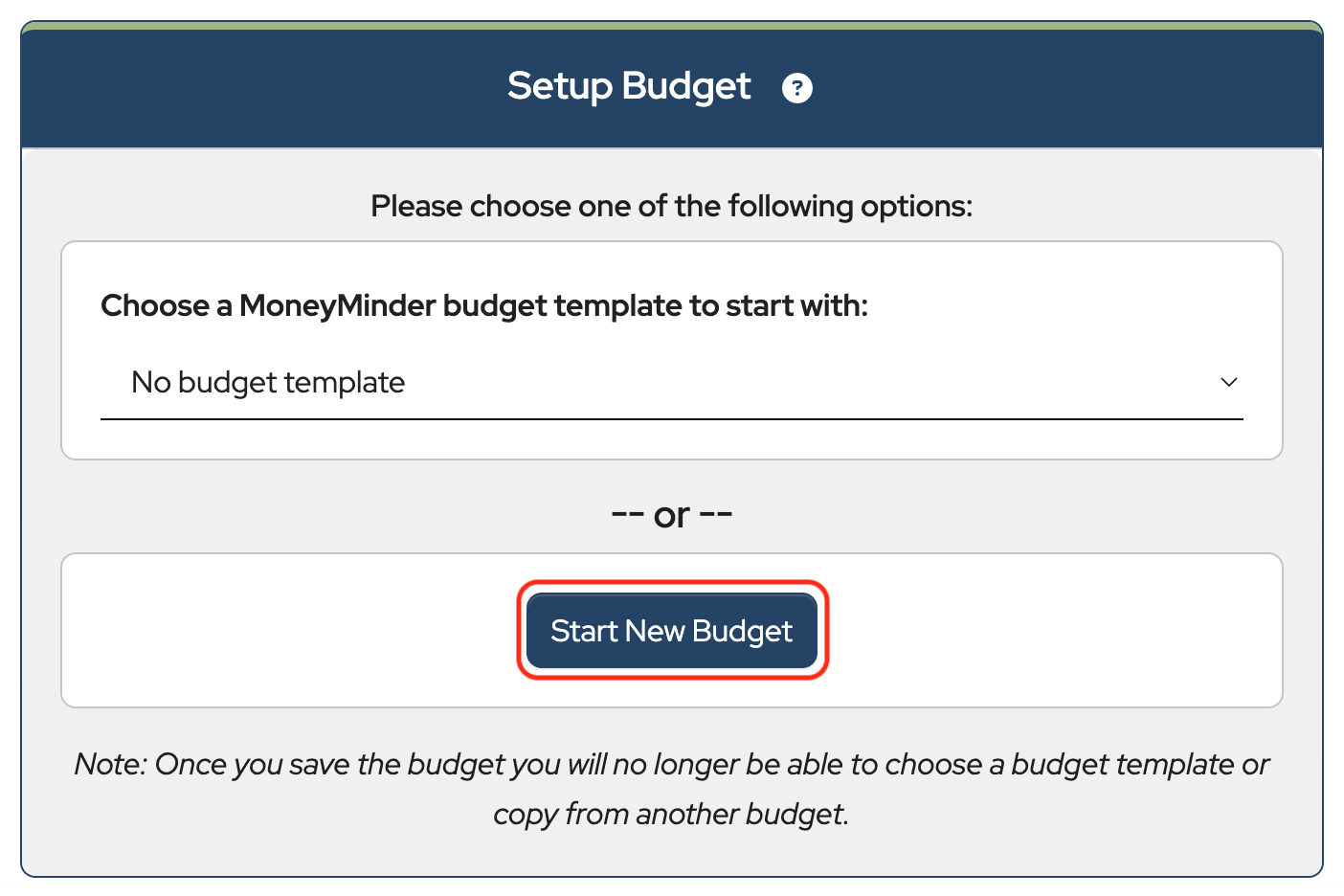
When entering a budget, keep in mind that Headings and Subheadings are a way to organize the budget, and Categories are what transactions are applied to and what are tracked on reports. Categories are organized below Headings and/or Subheadings and have dollar amounts that can be entered under Budgeted Income and/or Budgeted Expenses. See the example below:
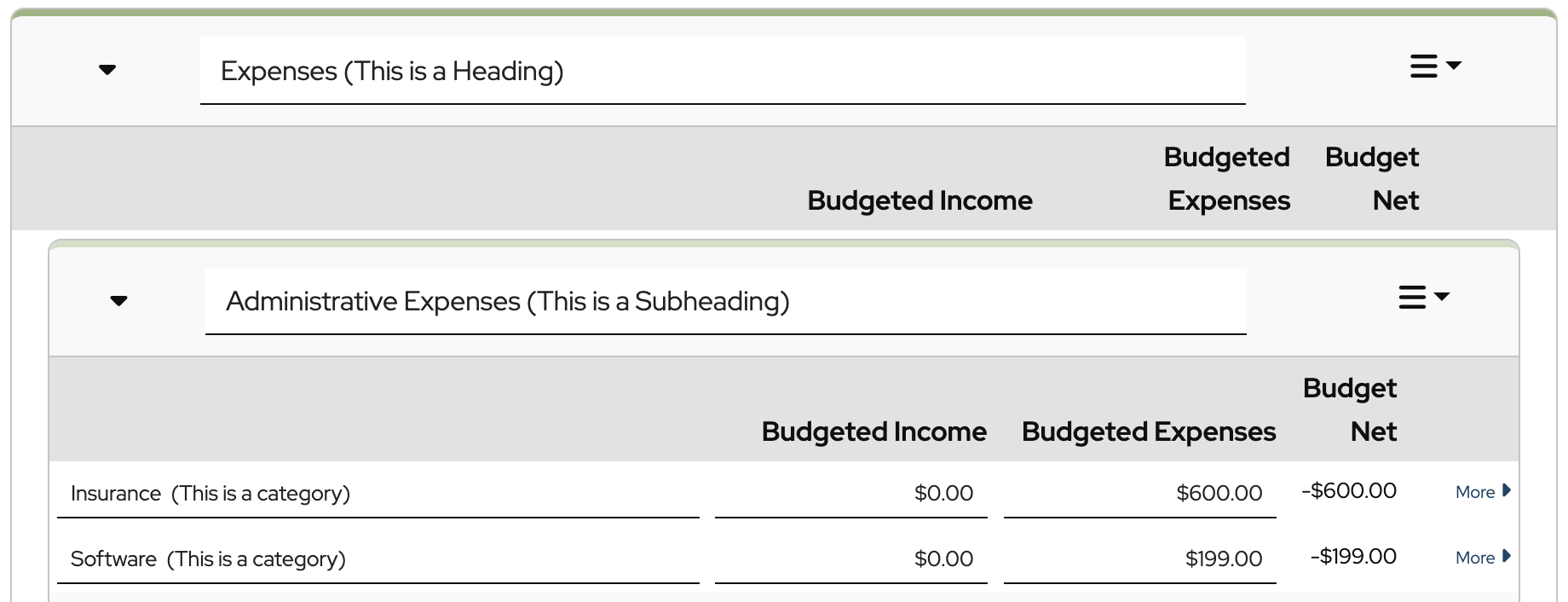
Enter the name of the first Heading.

Continue creating the budget by adding Headings, Subheadings, and Categories.
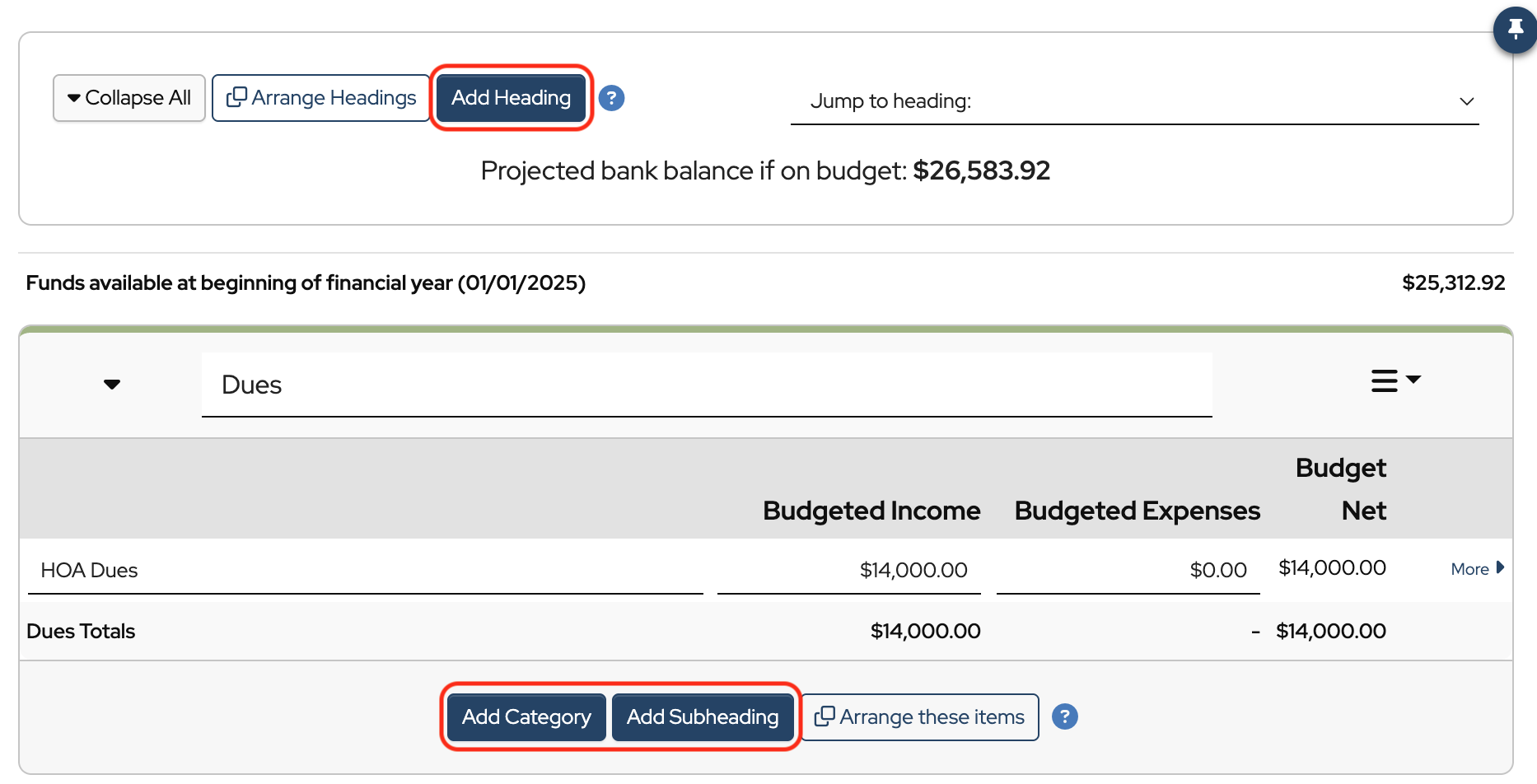
When finished, click Save Changes.
To delete a Category:
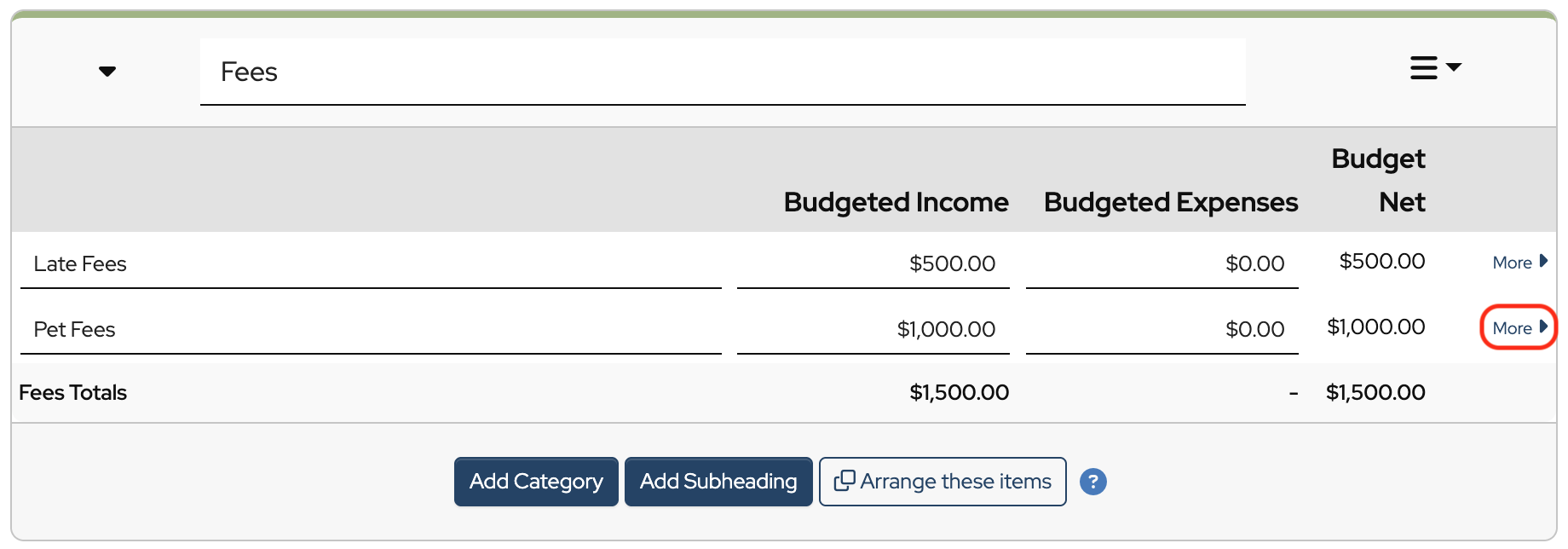
- Click the More> button to the right of the category.
- Click the red Delete button. Note: You can only delete a Category if there are no transactions applied to it.
- Click Save Changes.
To delete a Heading:
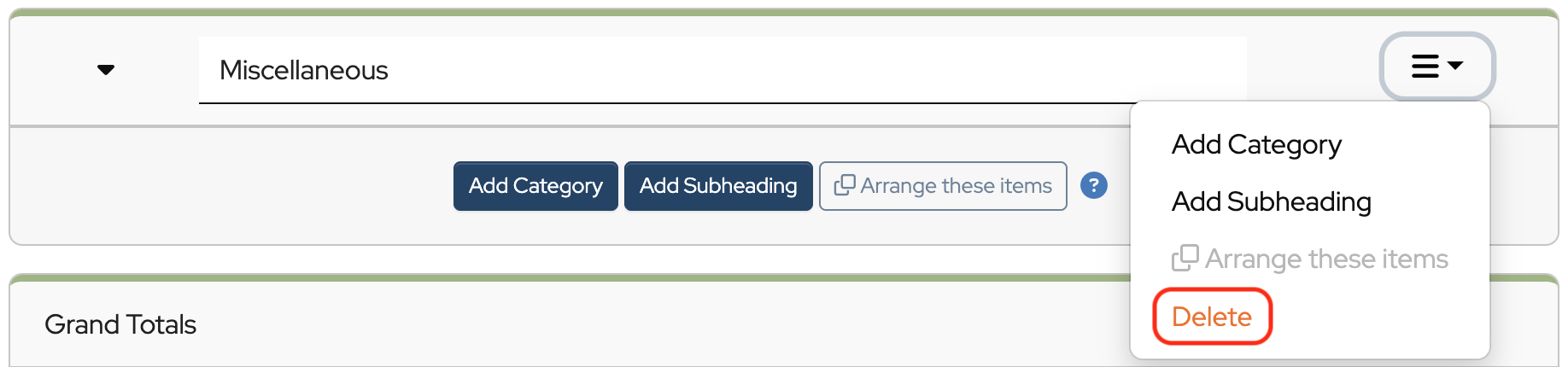
- Click the three lines (“hamburger”) to the right of the Heading name to open the dropdown.
- Click Delete. Note: You can only delete a Heading if there are no Categories or Subheadings listed beneath it.
- Click Save Changes.
To move a Heading:
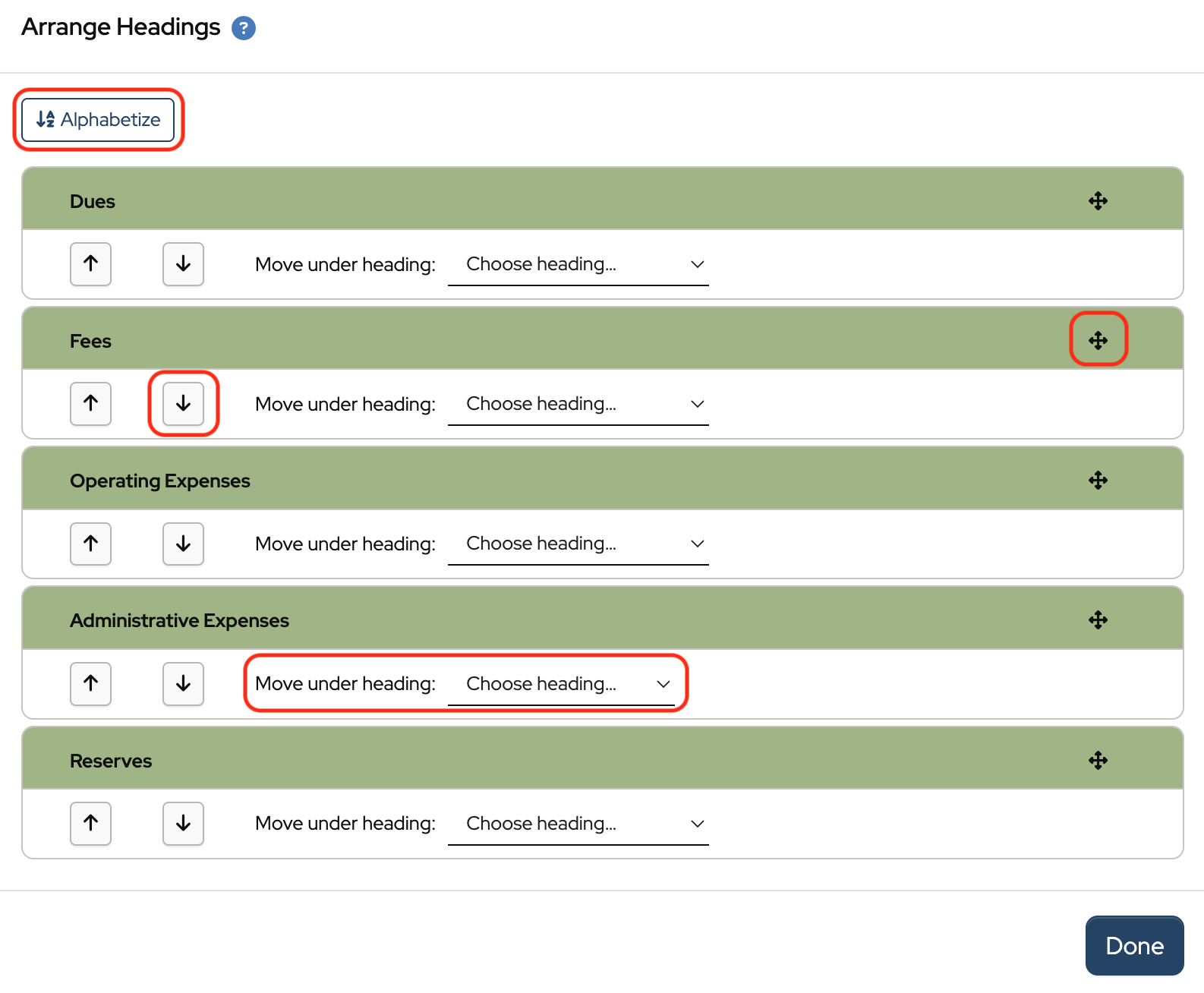
Click Arrange Headings in the static toolbar at the top of the screen.

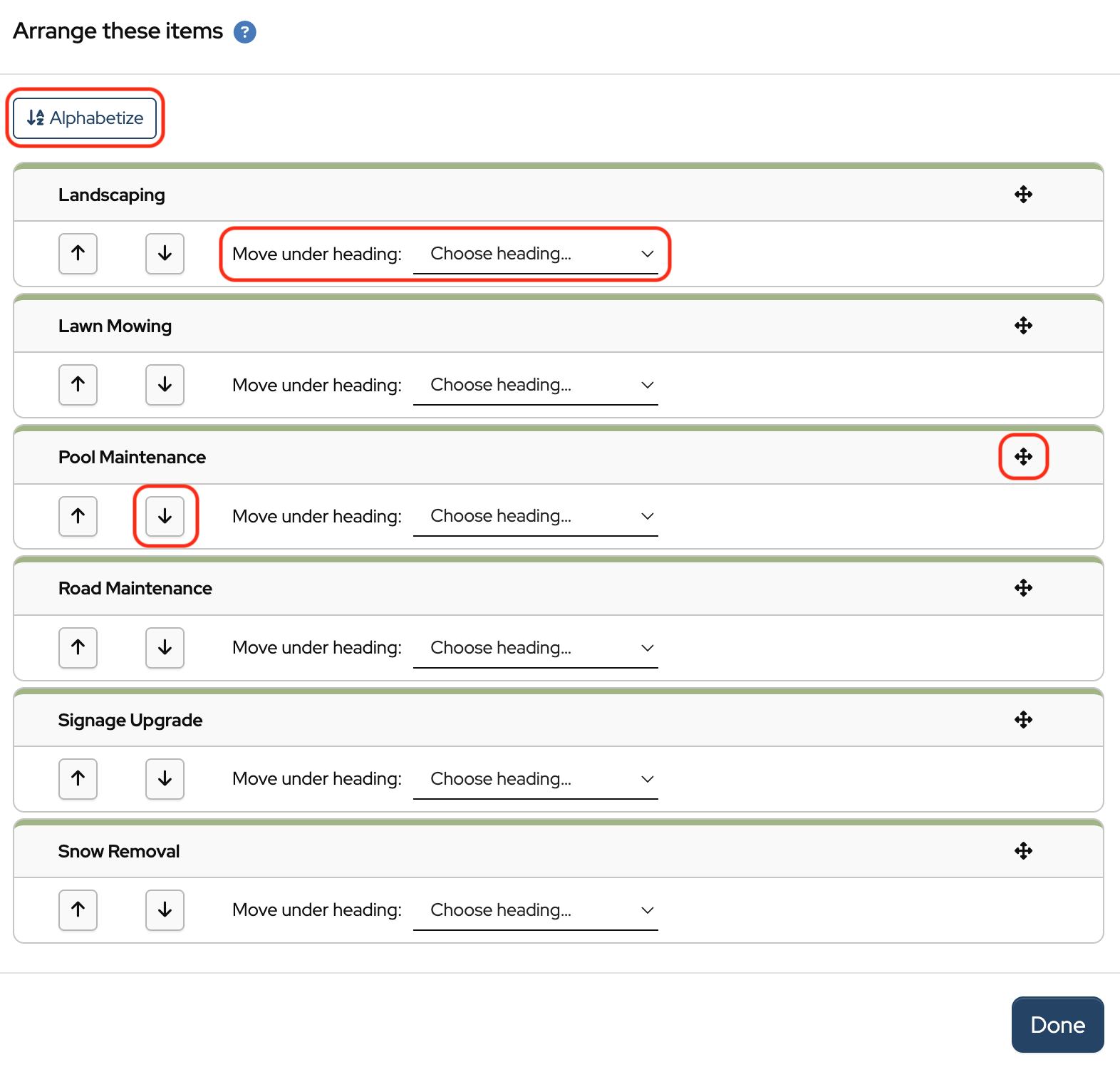
- Use the Alphabetize button or the up/down arrows to re-order the Headings, or click and drag to change a Headings position.
- To move a Heading under a different Heading, click the Choose heading dropdown and select the Heading.
- Click Done and then Save Changes.
To move a Category:
Click the Arrange these items button at the bottom of the Heading or click the “hamburger” to open the dropdown and choose Arrange these items.
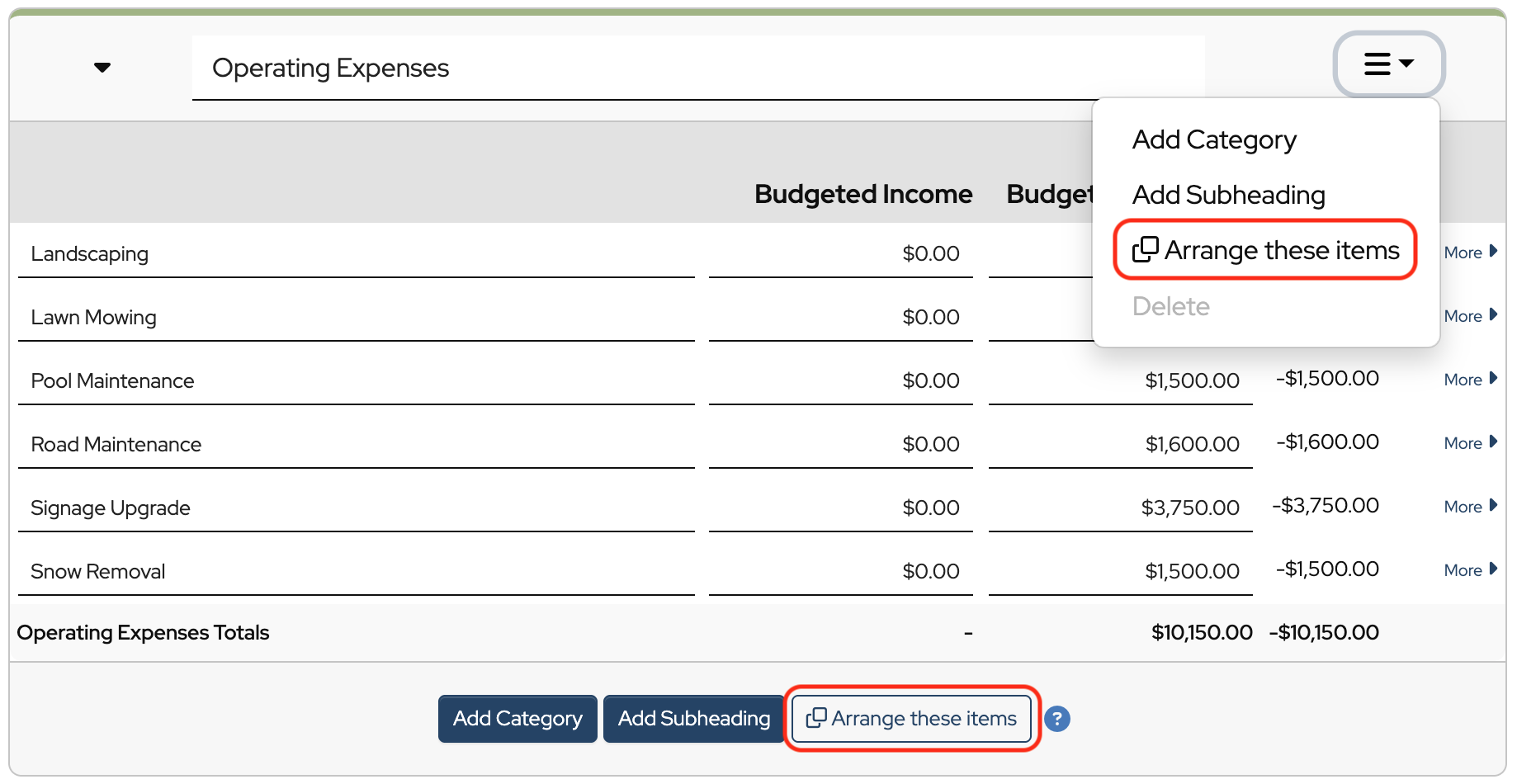
- Use the Alphabetize button or the up/down arrows to re-order, or click and drag the Category to change its position.
- To move a Category under a different Heading, click the Choose heading dropdown and select the Heading.
- Click Done and then Save Changes.
Import Contact list
Click Guidelines for importing your Contact list for more information.
3. Enter a Few Transactions & Attach Receipts
To enter a DEPOSIT
Click Banking in the sidebar.
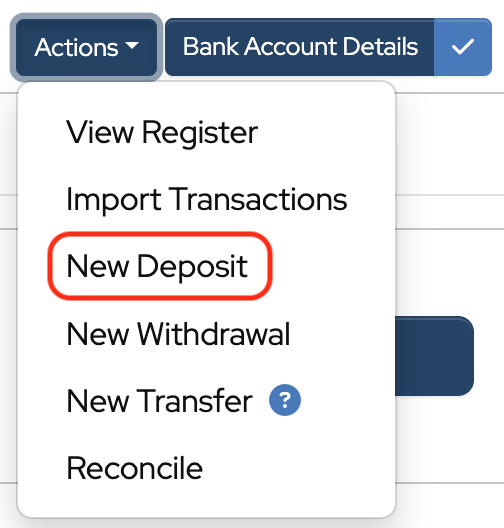
Click Actions to the right of the bank account.

Choose New Deposit from the dropdown.
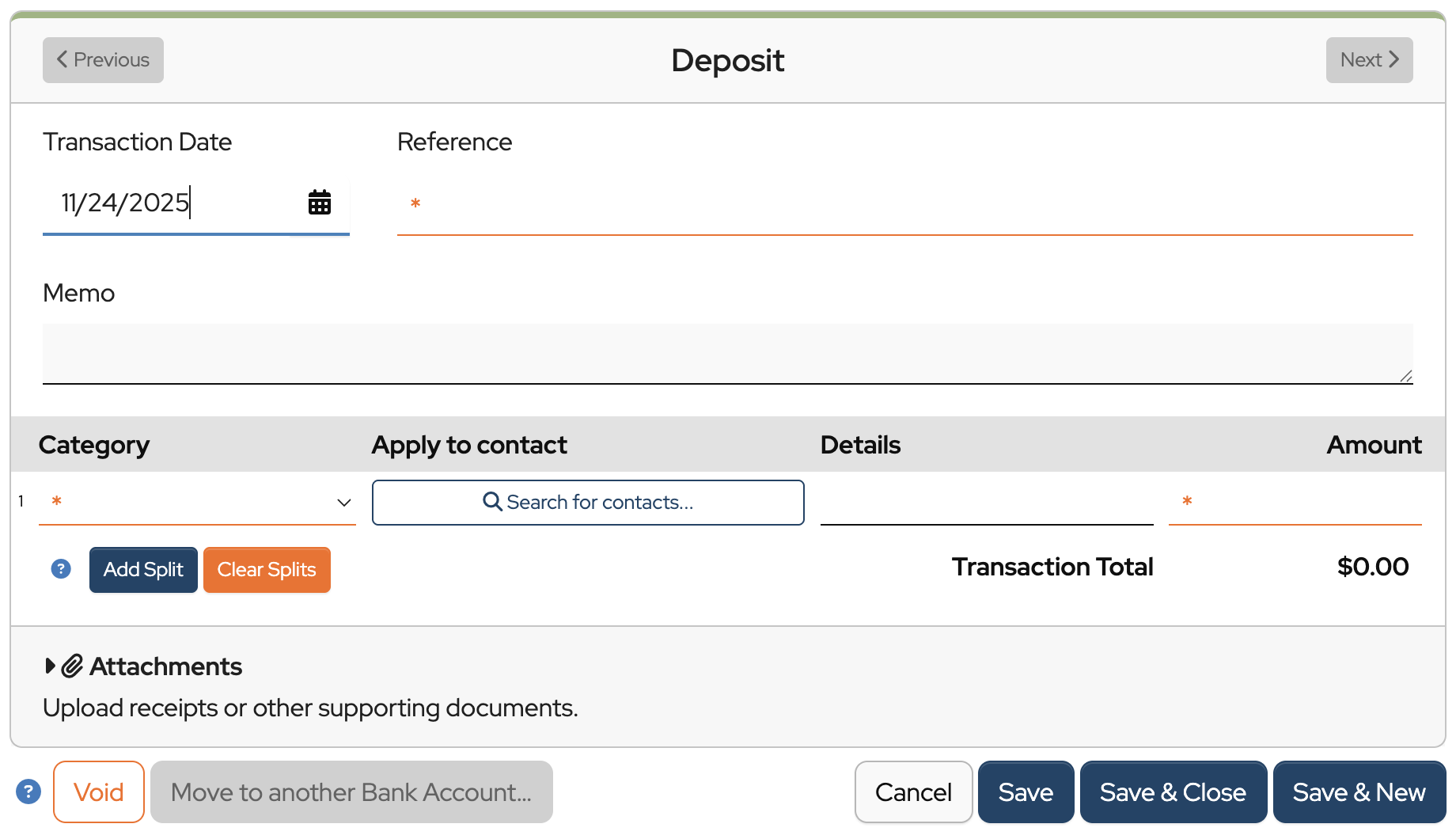
Fill in the required fields:
- Date: Enter the date the deposit was made.
- Reference: Enter the identifying reference number or words, or choose from the dropdown.
- Memo (optional): Use up to 512 characters to create a reminder about this deposit. The memo will show in the register.
- Category: Select a category from the dropdown list or add a new one. These are the budget items that were entered in the Budget screen.
- Apply to Contact (optional): This can be used if contacts pay for things like dues, team fees, or donate to the organization and you want to keep track of contact balances.
- Details (optional): Use up to 255 characters to create details about this deposit.
- Amount: Enter the amount for this portion of the deposit.
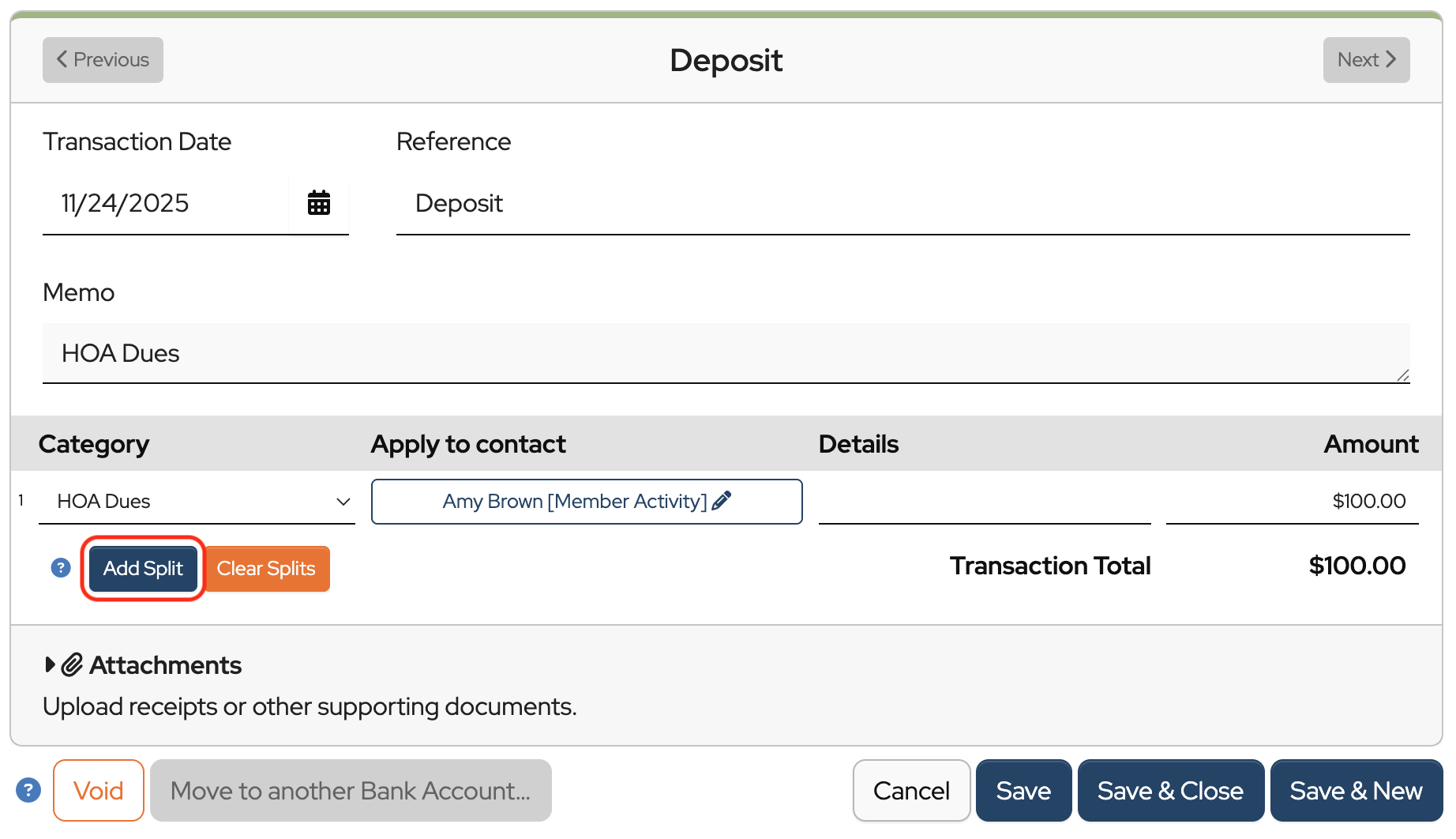
Click Add Split to add more lines to allocate various parts of a deposit to different categories or to different contacts. These split amounts must equal the Transaction Total.
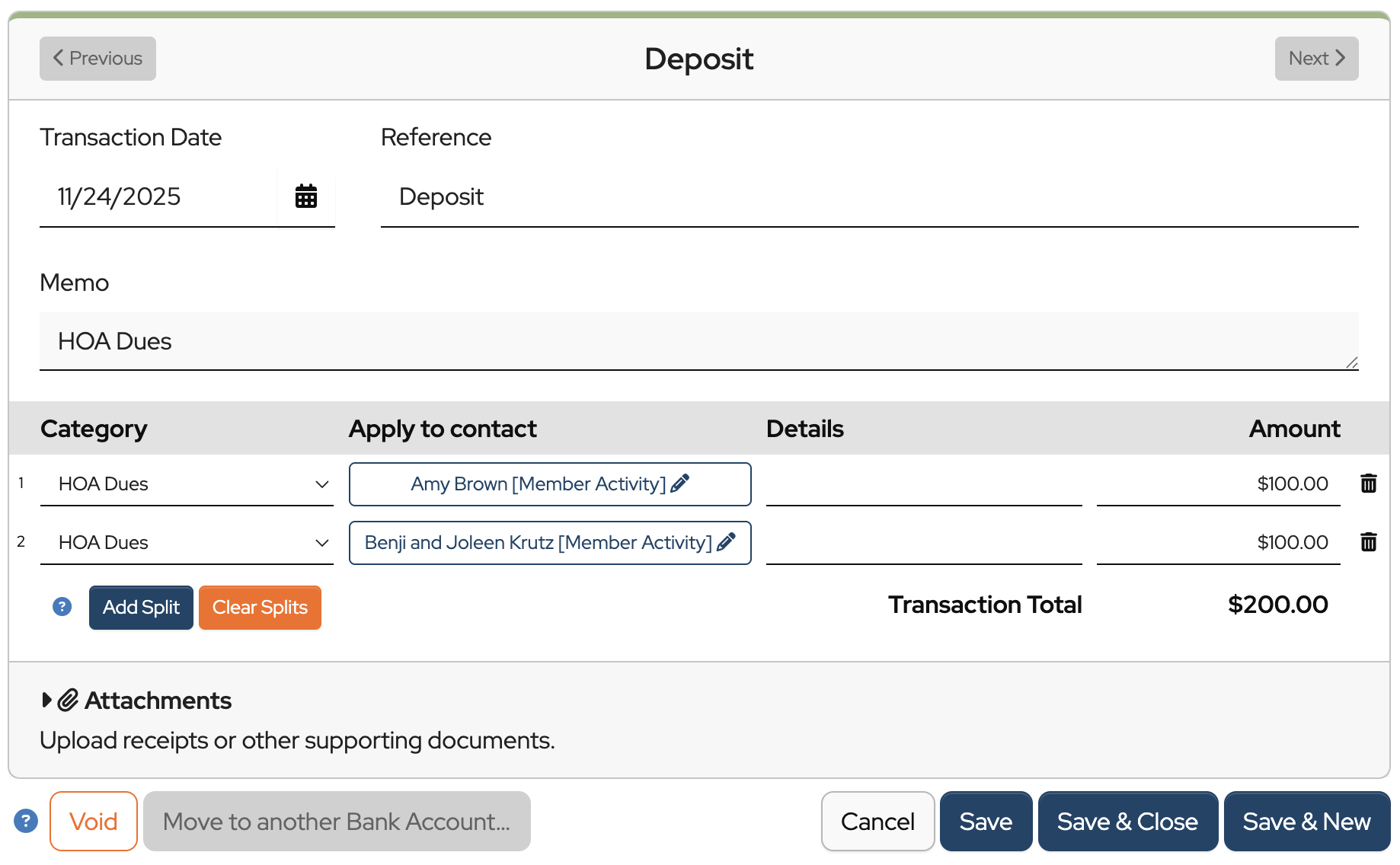
Click Clear Splits to delete information entered in all split lines for this transaction.
Click the garbage can to the right of a split if you want to delete only one split.
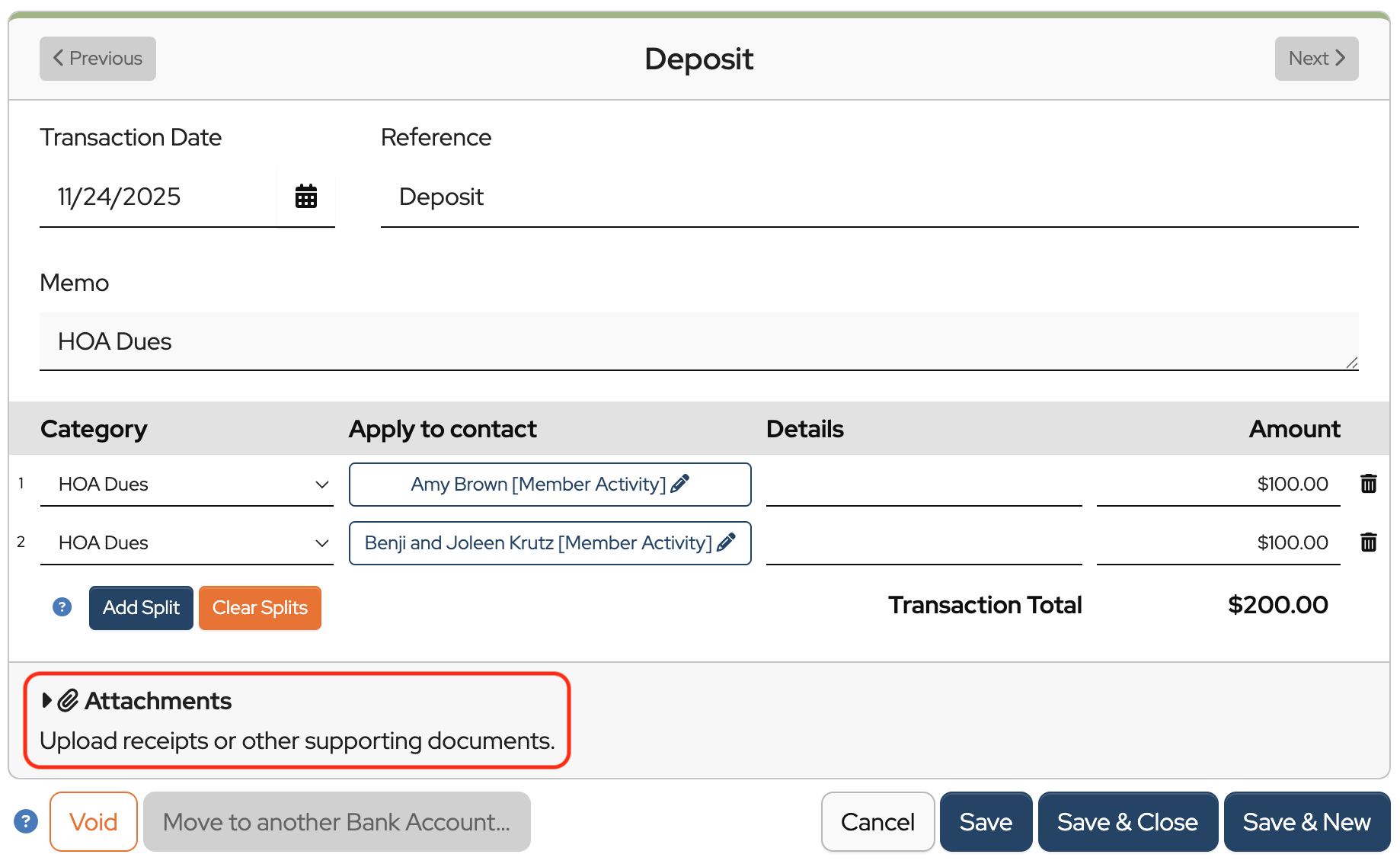
To attach a receipt to a deposit click on Attachments.
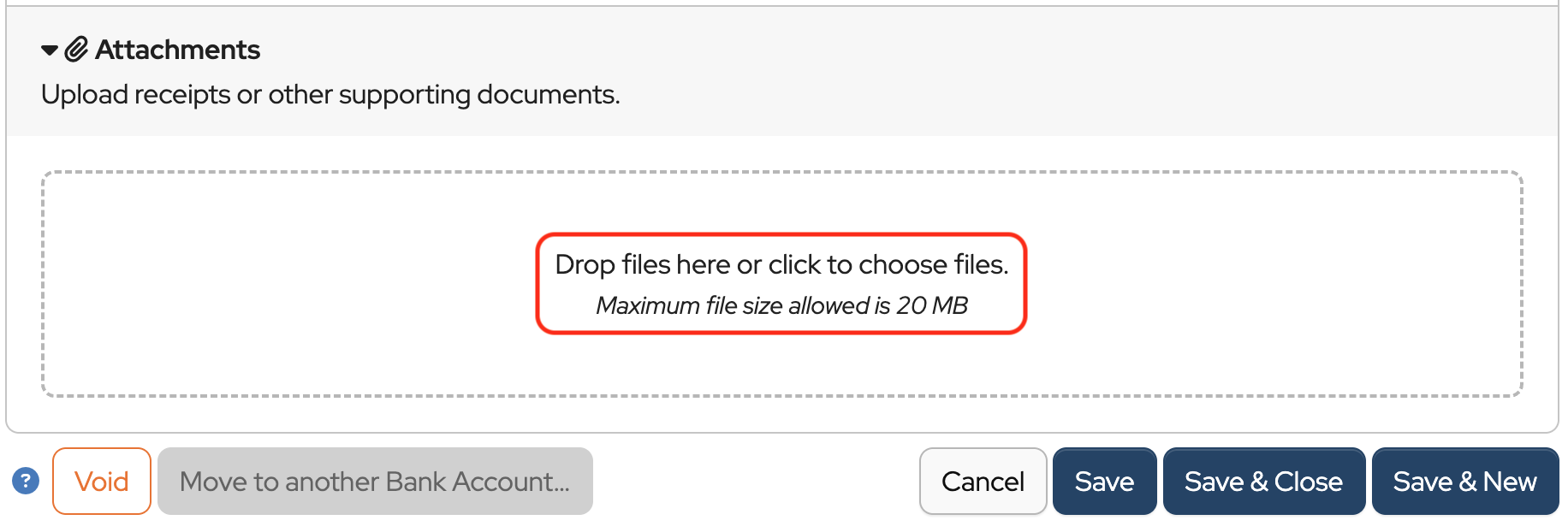
Drag & drop a file inside the dotted line OR click the words to choose a file.
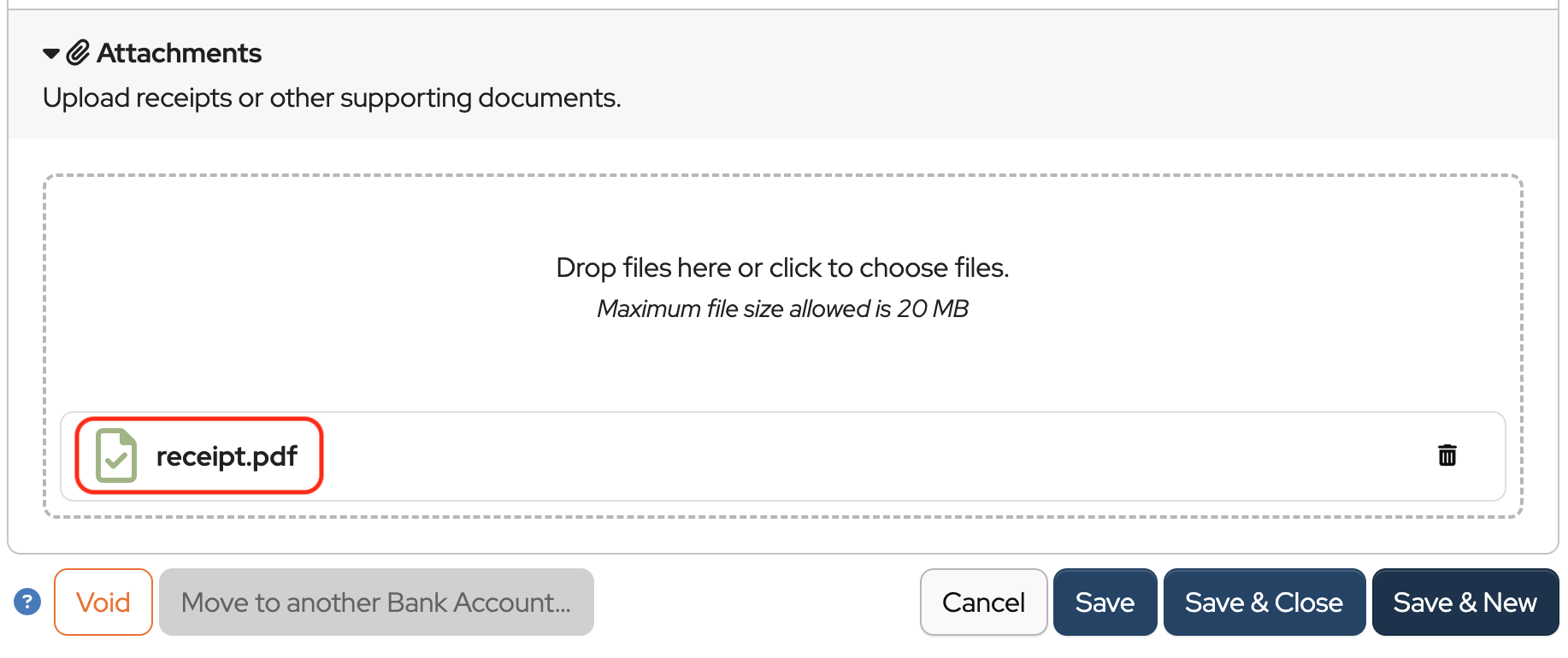
Confirm that it’s been successfully uploaded.
When finished click one of the following:
- Cancel to cancel the deposit in progress and return to the bank register.
- Save to save an in-progress transaction.
- Save & Close saves the transaction and closes the window taking you back to the bank register.
- Save & New saves the transaction and opens a new window to enter another deposit.
To enter a WITHDRAWAL
Click Banking in the sidebar.
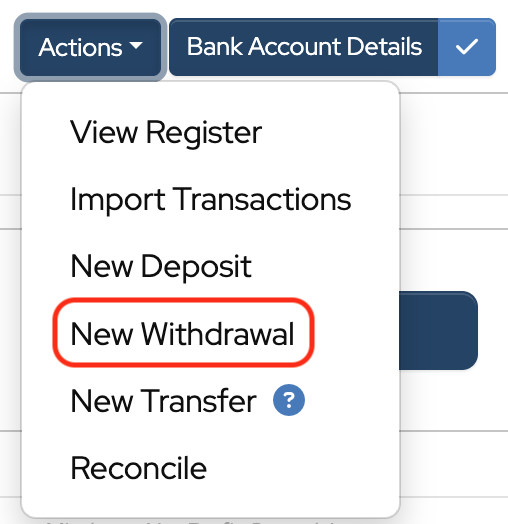
Click the Actions to the right of the bank account.
Choose New Withdrawal from the dropdown.
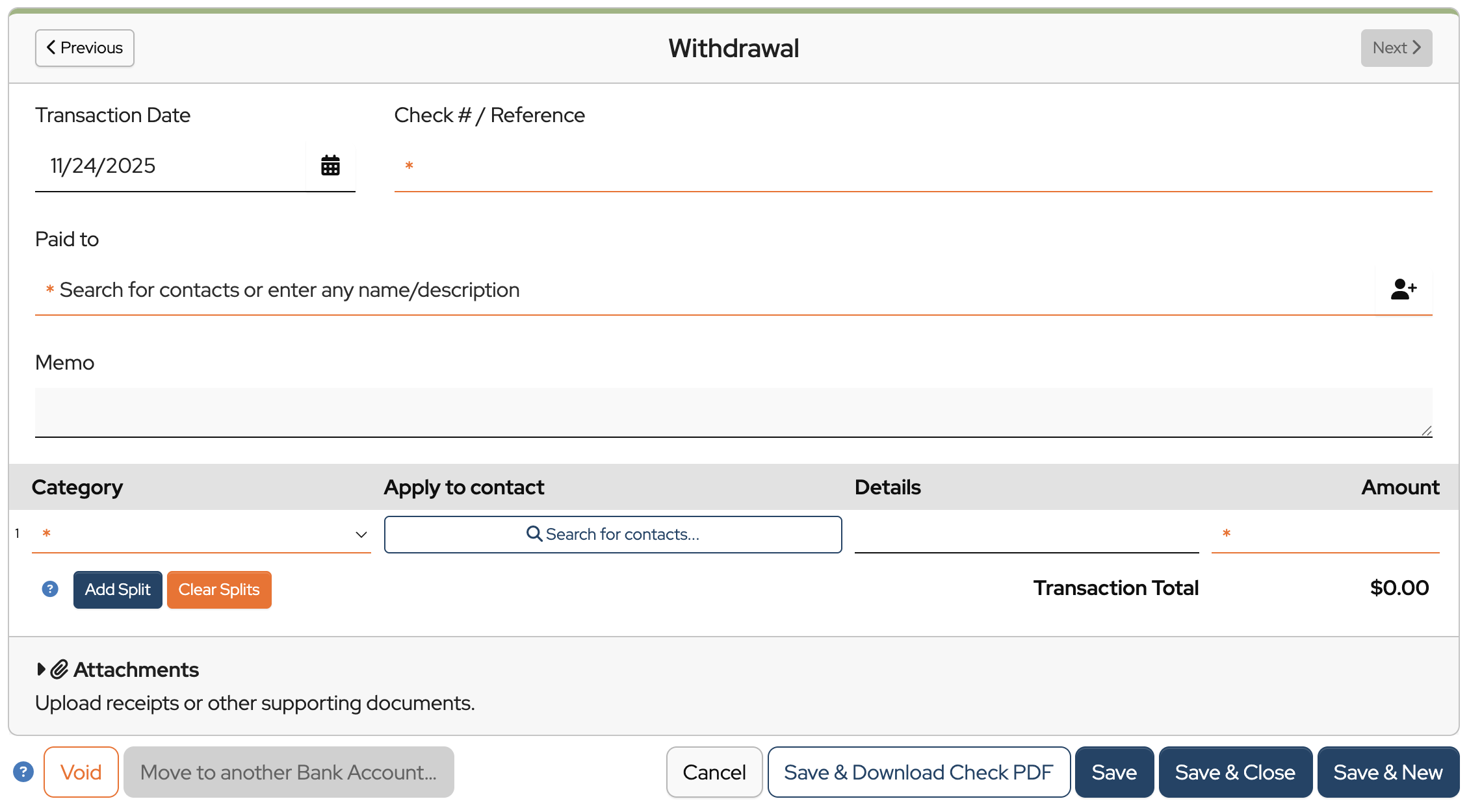
Fill in the required fields:
- Date: Date of withdrawal.
- Check #/Reference: Enter a check number or identifying words, or choose from the dropdown.
- Paid to: Select a name from the dropdown or enter the name of the person/organization the withdrawal is payable to.
- Memo (optional): Use up to 512 characters to enter notes and extra details about this withdrawal. The memo will show in the register.
- Category: Select a category from the dropdown list or add a new one. These are the budget items that were entered in the Budget screen.
- Apply to Contact (optional): This can be used if the organization reimburses a contact or pays a vendor or contractor and wants to apply the payment to the contact’s record in MoneyMinder to track it.
- Details (optional): Use up to 255 characters to create details about this withdrawal.
- Amount: Enter the amount for this portion of the withdrawal.
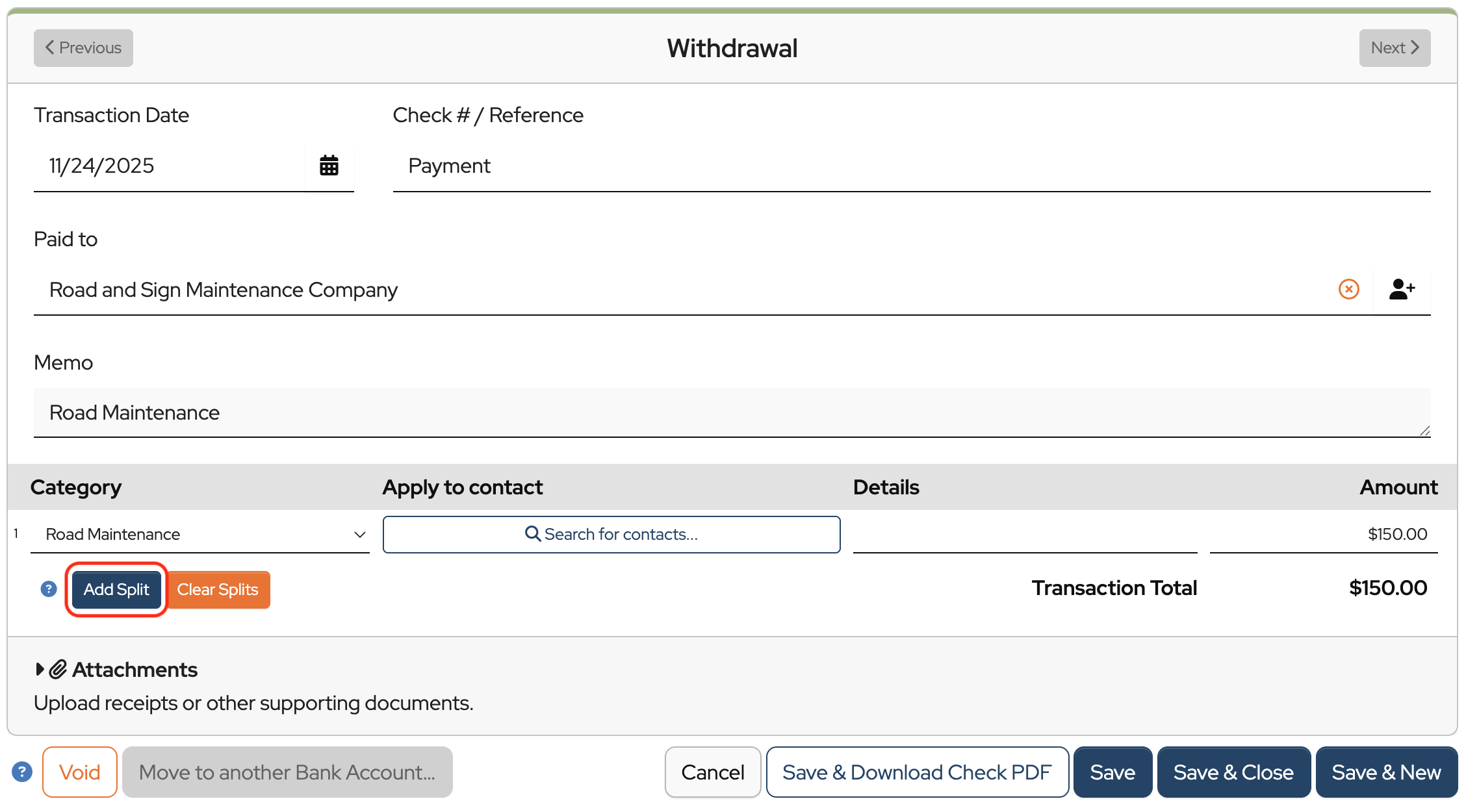
Click Add Split to add more lines to allocate various parts of an expense to different categories or different contacts. These split amounts must equal the Transaction Total.
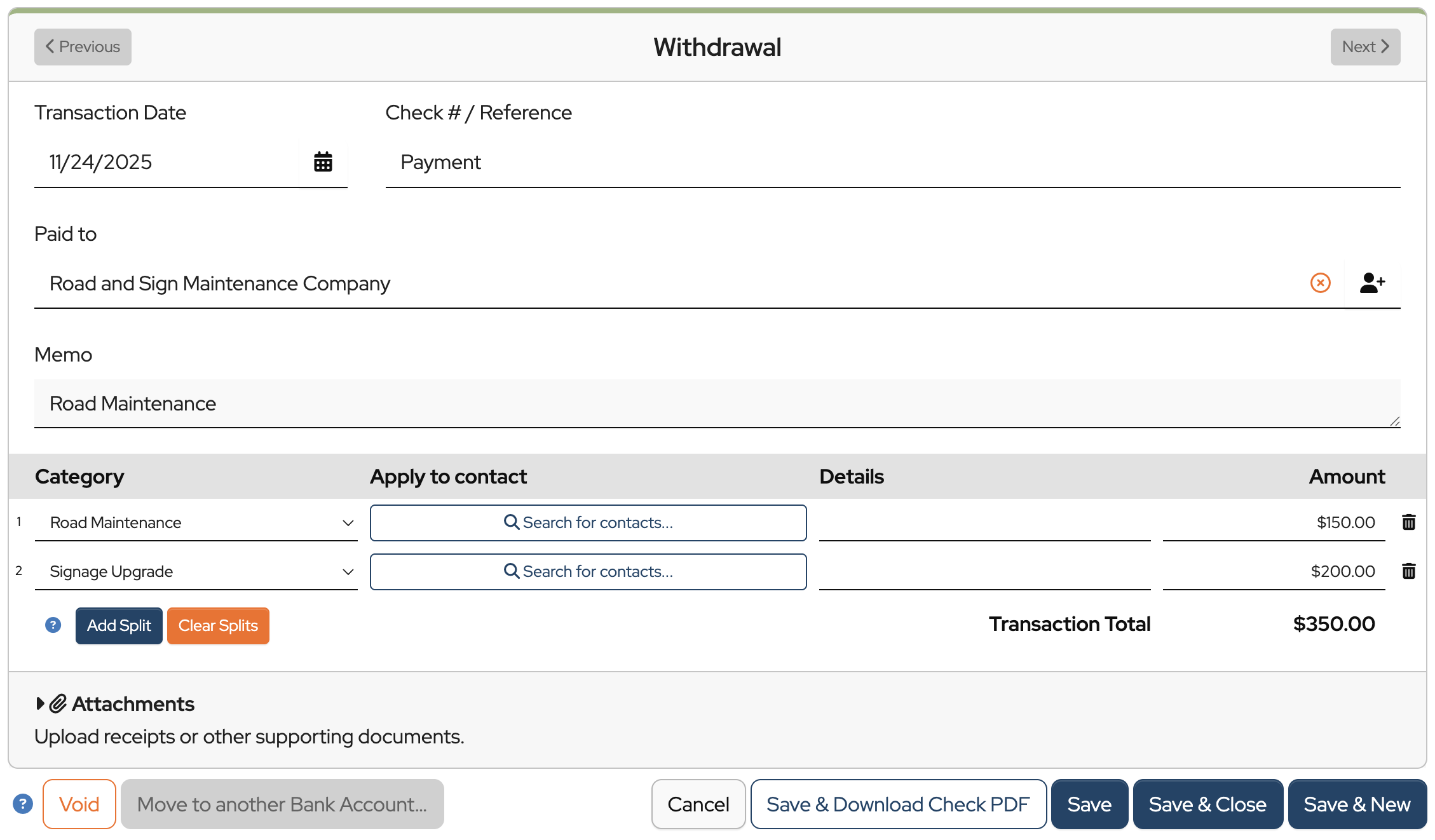
Click Clear Splits to delete information entered in all split lines for this transaction.
Click the garbage can to the right of a split if you want to delete only one split.
Click Void to save a check that is not disbursed, maintaining your check sequencing. This also keeps record of the check since it will not clear your bank.
To attach a receipt to a withdrawal click on Attachments.
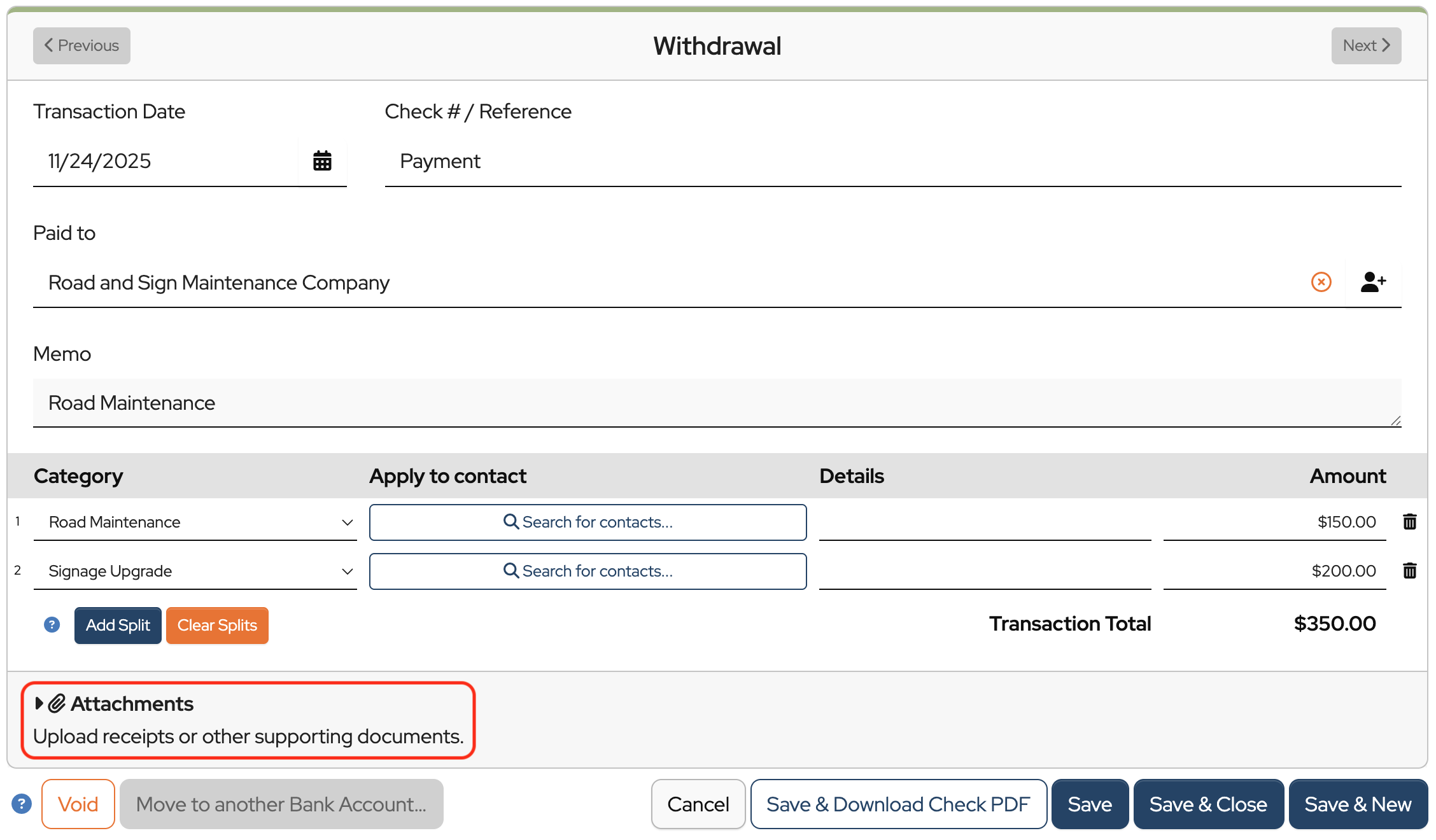
Drag & drop a file inside the dotted line OR click the words to choose a file.
Confirm that it’s been successfully uploaded.
When finished click one of the following:
- Cancel to cancel the withdrawal in progress and return to the bank register.
- Save & Download Check PDF saves the entry in MoneyMinder and simultaneously downloads a PDF to your hard drive for printing purposes.
- Save & Close saves the transaction and closes the window taking you back to the bank register.
- Save & New saves the transaction and opens a new window to enter another withdrawal.
4. View Some Reports
MoneyMinder includes many click-of-the-mouse reports.
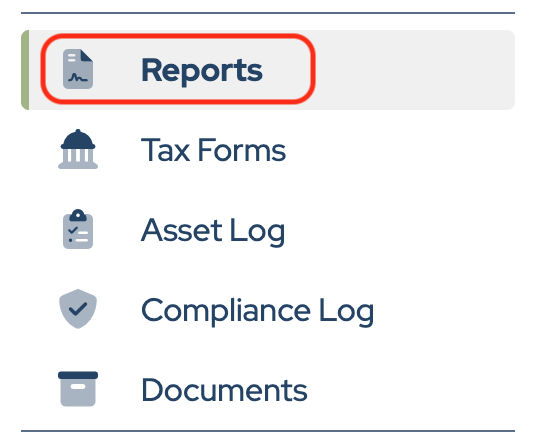
Click Reports in the sidebar.
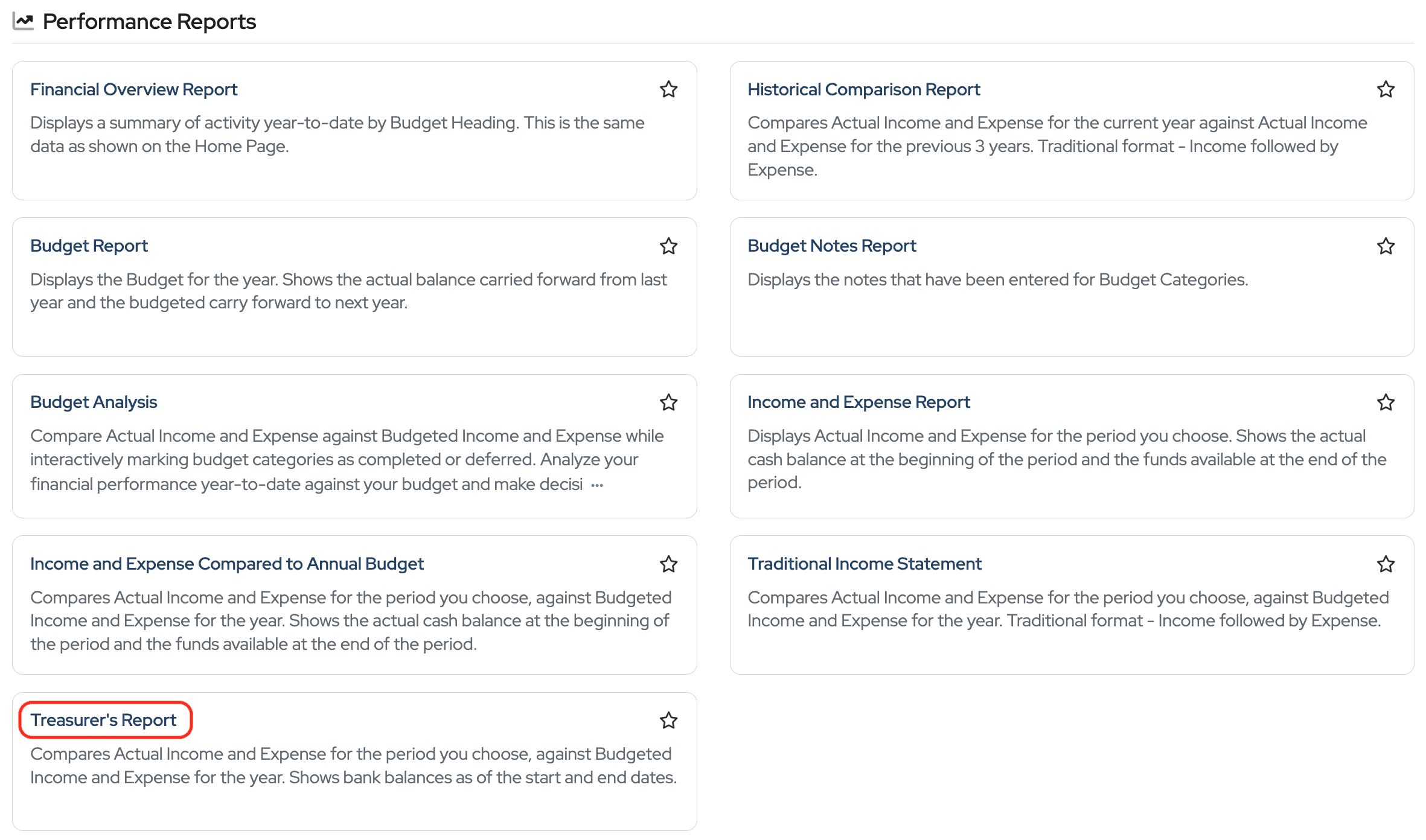
Click the report you’d like to view.
Most reports have the option to Print, Export to PDF, or Export to Excel:

Here are some of the most popular reports:
The Treasurer’s Report
Many Treasurers take this report to their monthly meeting as it provides total income & expenses against budget for a designated time period. It also shows starting and ending bank balances.
The Budget Report
Displays the Budget for the year. Shows the actual balance carried forward from last year and the projected budgeted carry forward to next year.
Reconciliations Report
Displays detailed information for each bank reconciliation.
All Transactions by Category Report
Lists transactions in date order for all Categories in alphabetical order. You can also choose to show only selected categories.
The Audit Report
Summary report comparing Bank Statement balances to MoneyMinder balances to ensure that they match.
Check out these reports and others to see what’s available.
5. How to Add Users
MoneyMinder allows for an unlimited number of users on an account. The level of access is determined by the User Role selected.
Click Settings in the sidebar.
To add a new user:
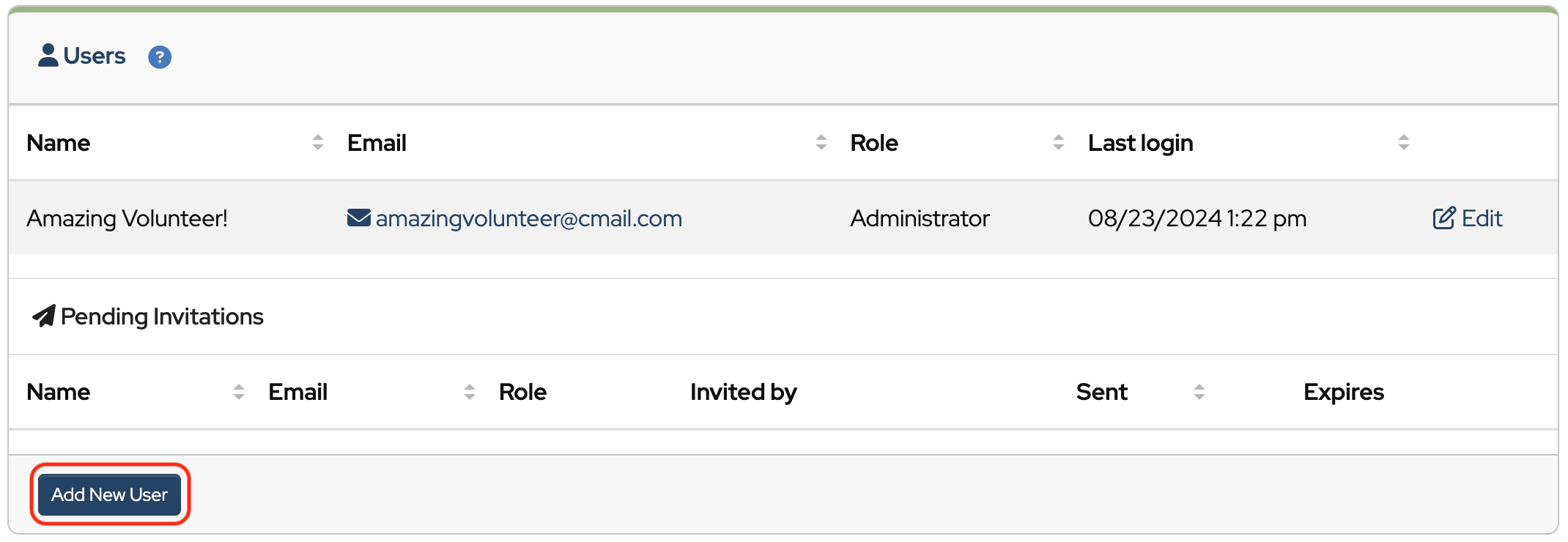
Scroll down to the Users section of the page. Click Add New User.
- Enter name and email address
- Select a Role: (Treasurers should be assigned the Administrator Role)
- Click Send Invite
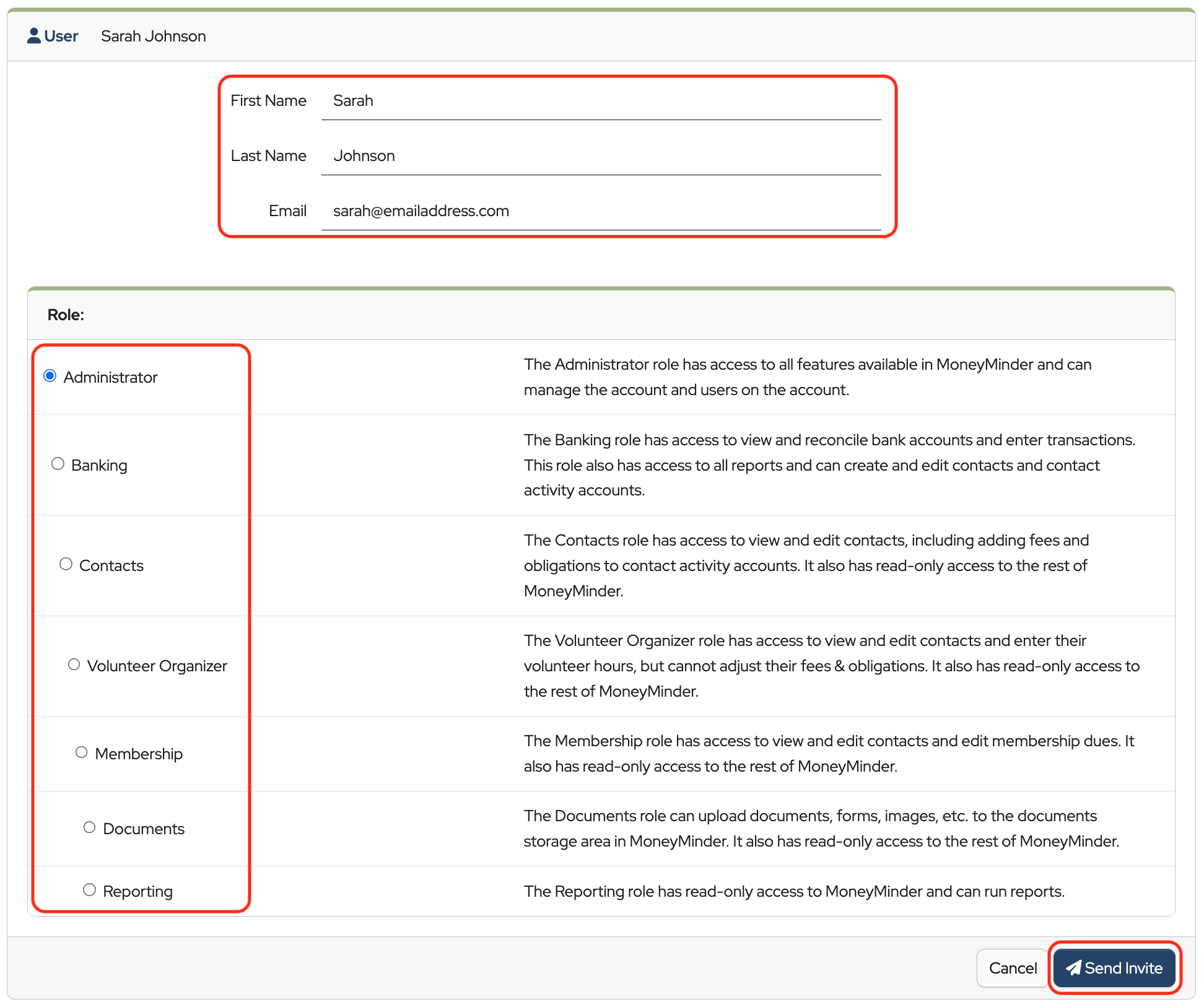
This will send an invitation to the email address that was entered with a link to create a password. After the password has been created, the new user will be prompted to log in.
An Administrator can change a user’s role or remove them.
Click the Edit button associated with their name:

Click one of the radio buttons to select a new user role or scroll to the bottom and click Remove User from Group.
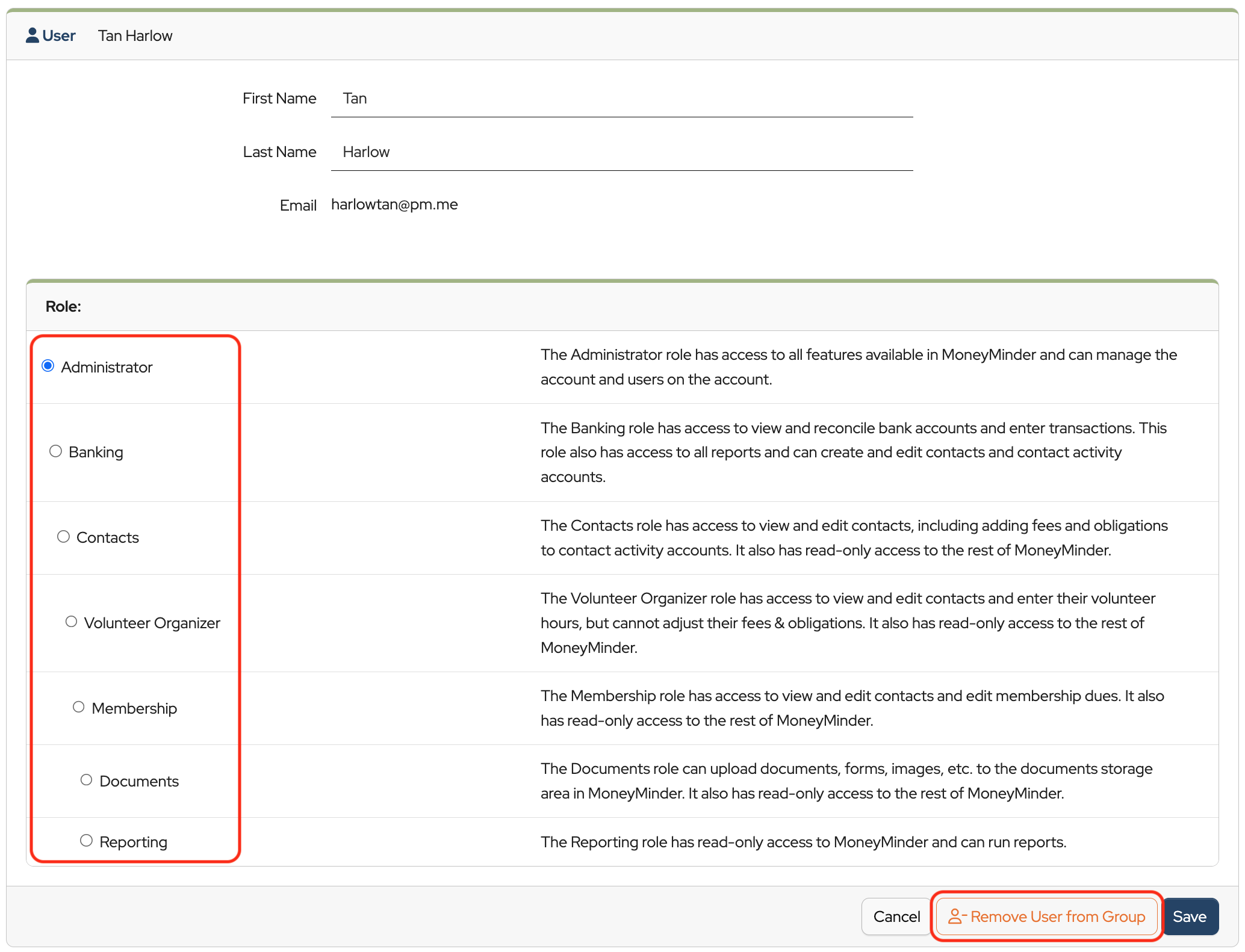
Click Save when finished.
A user can edit their own email and password. The administrator doesn’t have permissions to do that for another user.
The user will click the Edit button associated with their name.

Click Update Email and/or Change Password, and make the necessary changes.
The user role can be updated as well as long as there is at least one Administrator on the account.
A user can also remove themselves by clicking Leave Group as long as there is still an Administrator on the account.

6. Set Up a Custom Store
Click Store in the sidebar:
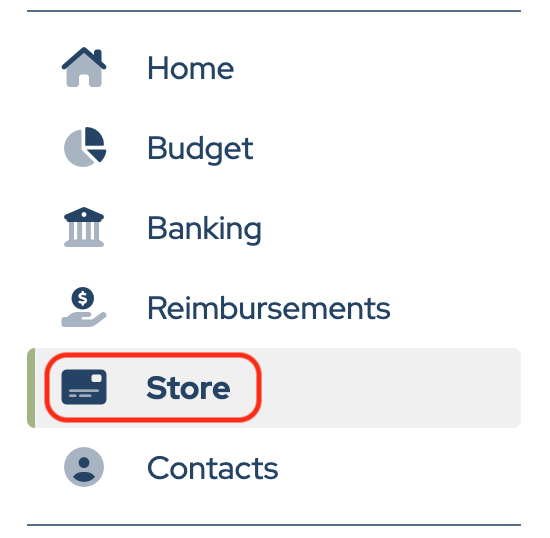
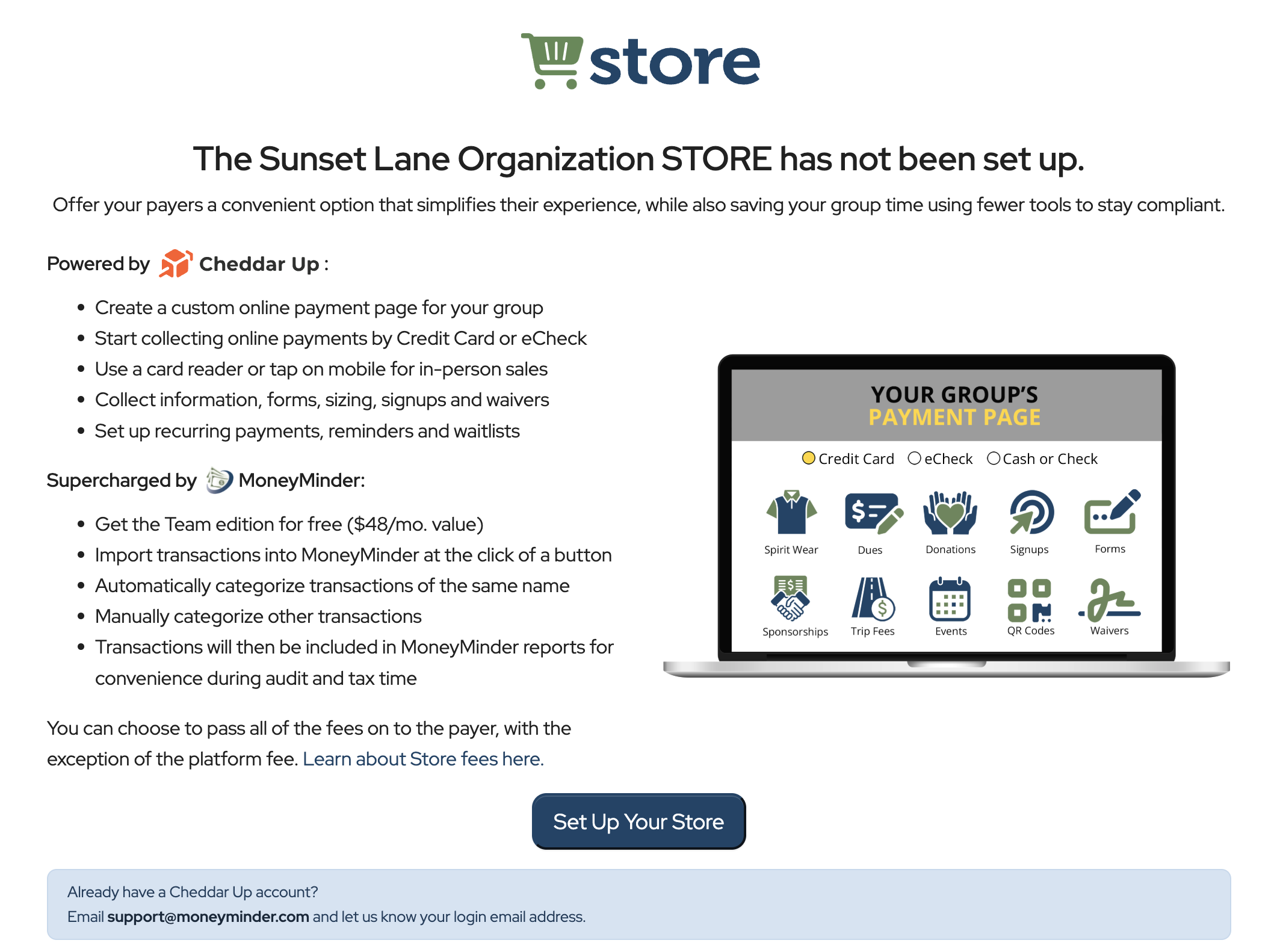
Review the features and fees and click Set Up Your Store.
Enter first and last name, and an email address. Then click Register.
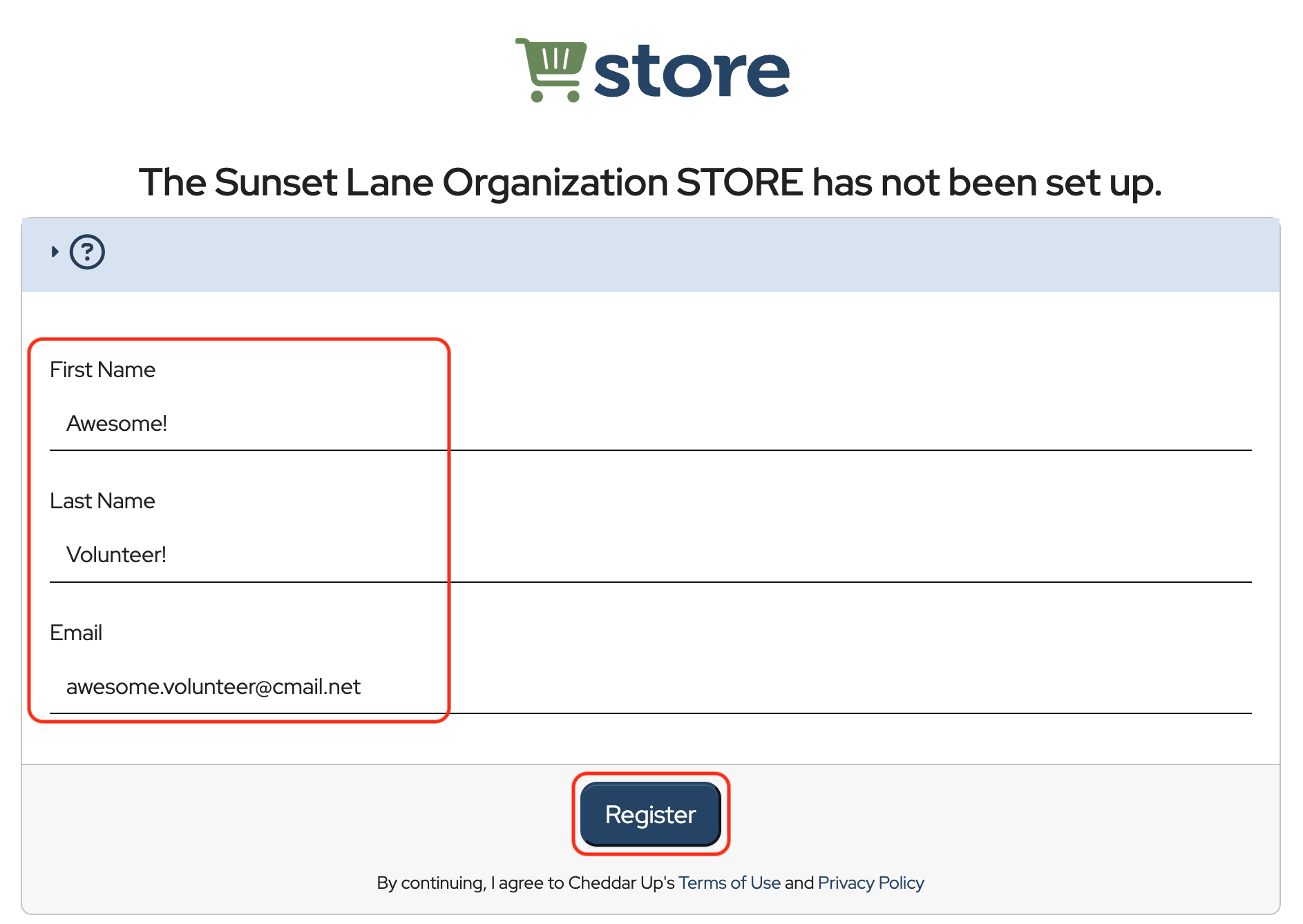
TIP: We recommend using the group’s email address when setting up a store so future treasurers can use the same login.
Already have a CheddarUp store? Email us to get it connected to your MoneyMinder Account: [email protected]
Click View and Manage Your Store to access CheddarUp.
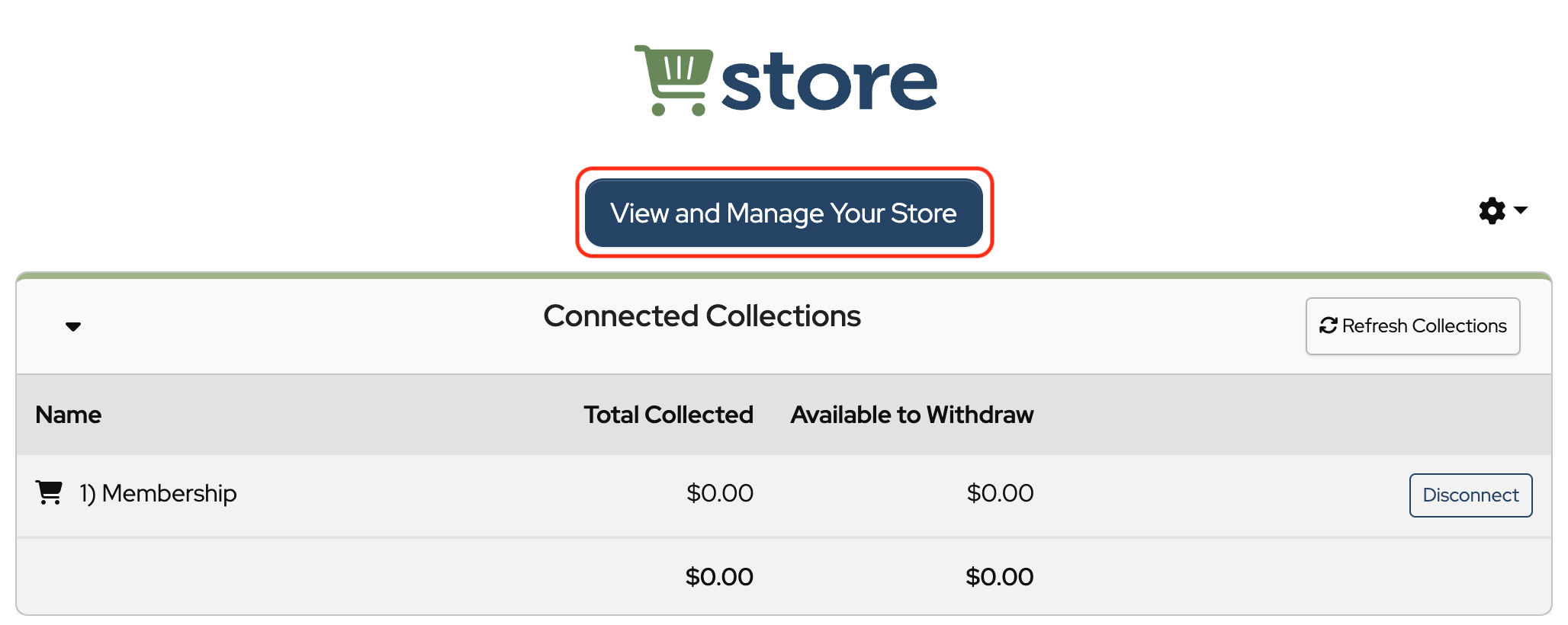
To get started and learn how to create collections and manage payments, check out Cheddar Up’s fantastic knowledgebase.
Note: When connecting Cheddar Up with MoneyMinder, your organization receives the Cheddar Up Team subscription at no additional cost—a $48/month value.
Credit card processing fees and e-check fees can be passed on to the payer. However, your organization pays the 0.4% platform fee on each transaction. For example, on a $100 transaction, the platform fee is $0.40.
7. Upload Documents
The Documents feature allows forms and records to be uploaded & stored.
Some common items that groups upload are Meeting Minutes, Bylaws, 990(EZ) forms, Meeting Agendas, Bank Statements, Audit Findings, NSF Check Letters, Flyers, and other documentation
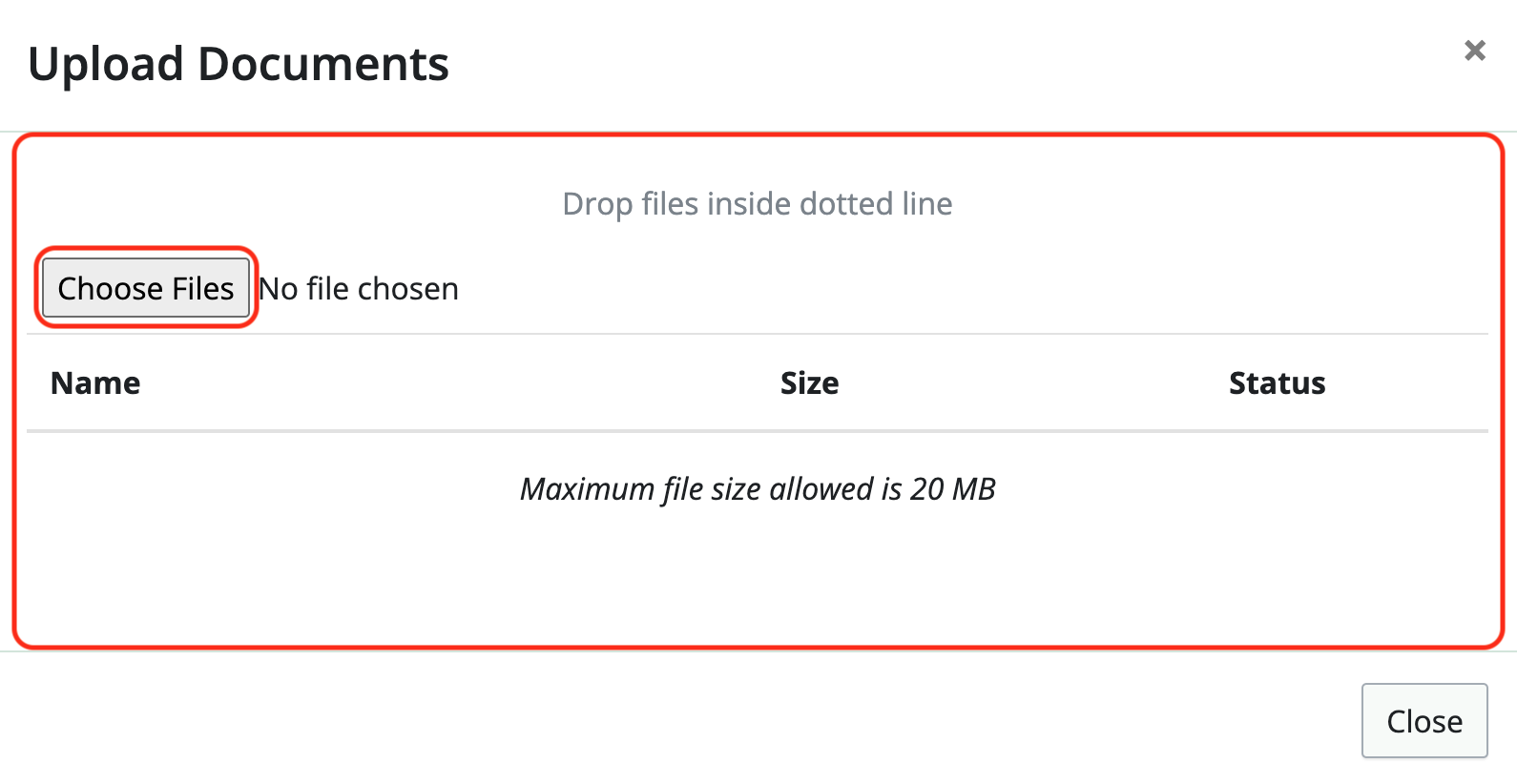
The maximum file size allowed for upload is 20MB per file.
Click Documents in the sidebar.
Click Upload Files.
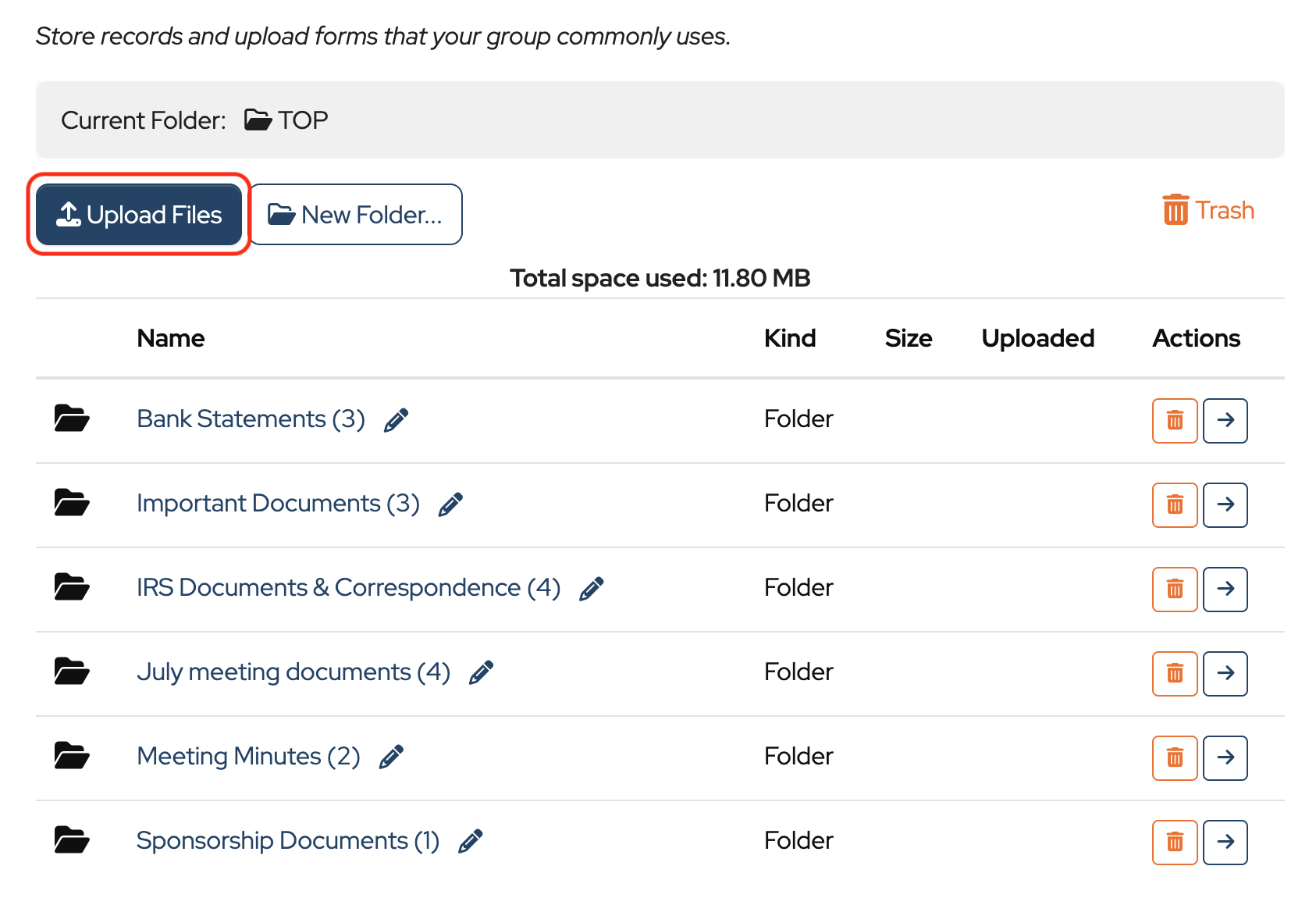
Next either drag & drop a file or choose a file from your file browser window.
Once the file has been uploaded, the Status will show Successfully Uploaded.
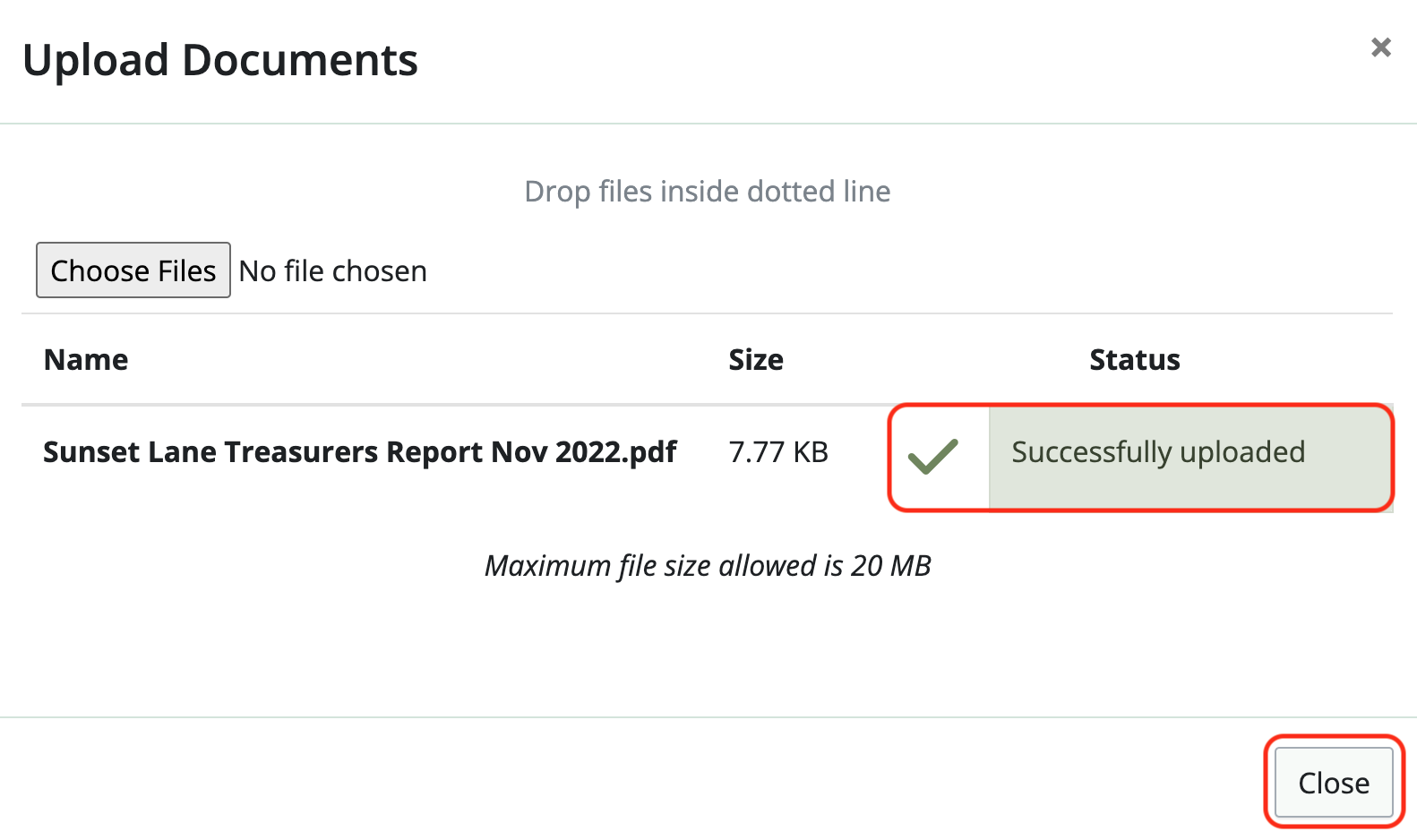
Click Close when done uploading.
That file will then be listed in the directory.
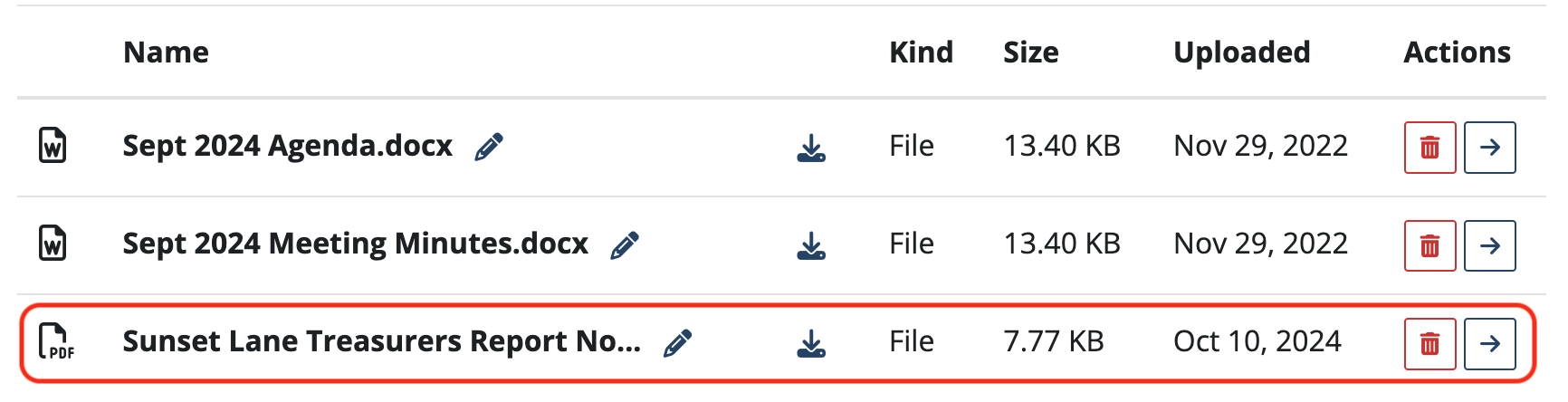
Organizing your documents
Click TOP to go to the main folder list.
Click on any Folder name to open the folder.
Click on an item name to open a viewer window to view the document if it’s a PDF or image file.
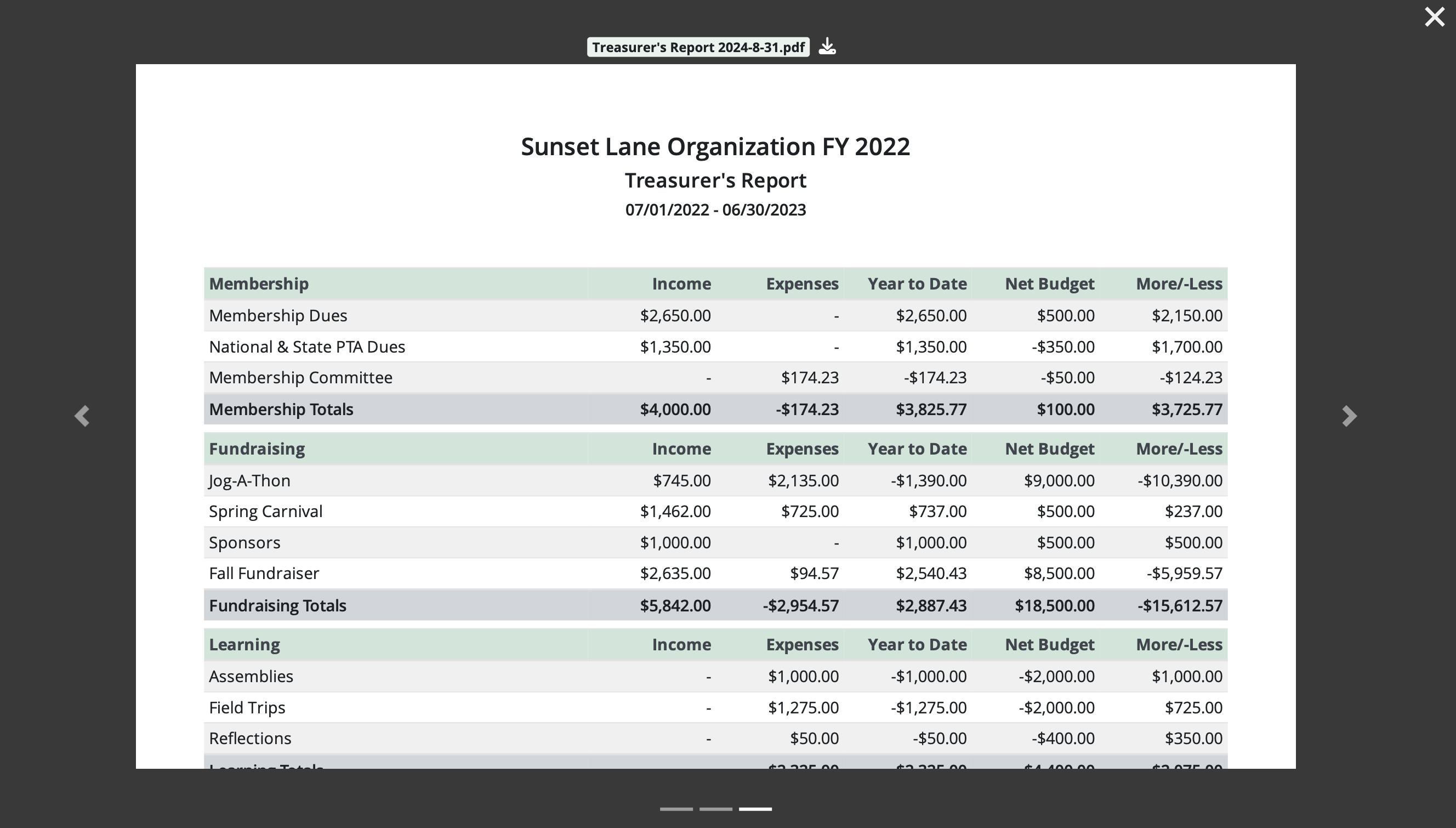
If it’s not an image or PDF, you’ll see the message, [File name] cannot be previewed, please download instead. Click the word download to initiate the process.

Click on the blue arrow icon to the right of an item or folder to move it into another folder.

Removing documents
To delete a document, click the trash can icon to the right of the document name.

Permanently deleting documents
When a document is deleted, it is moved to the Trash can.
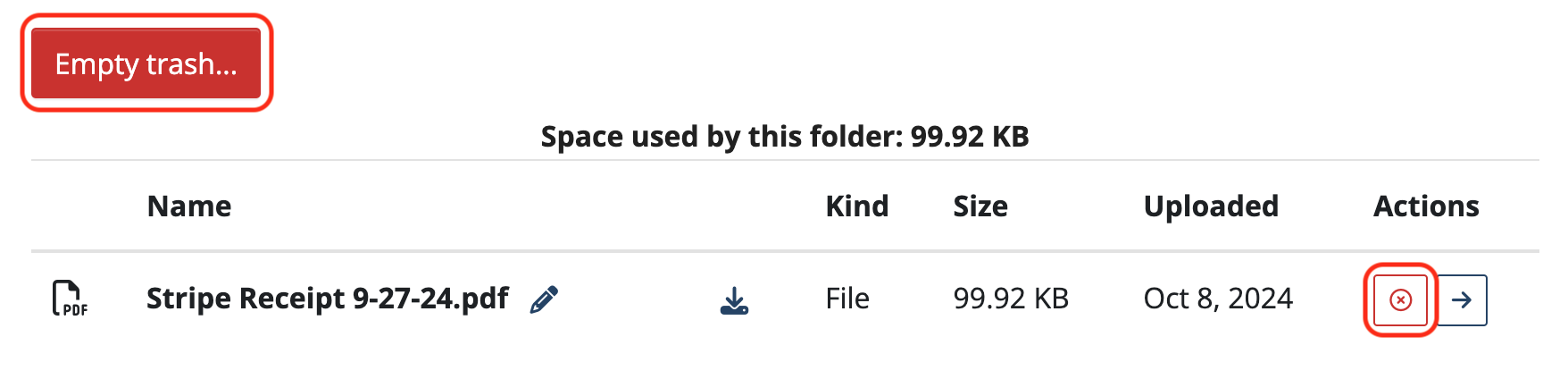
To permanently delete an item, click Trash to see a list of items in the Trash can.
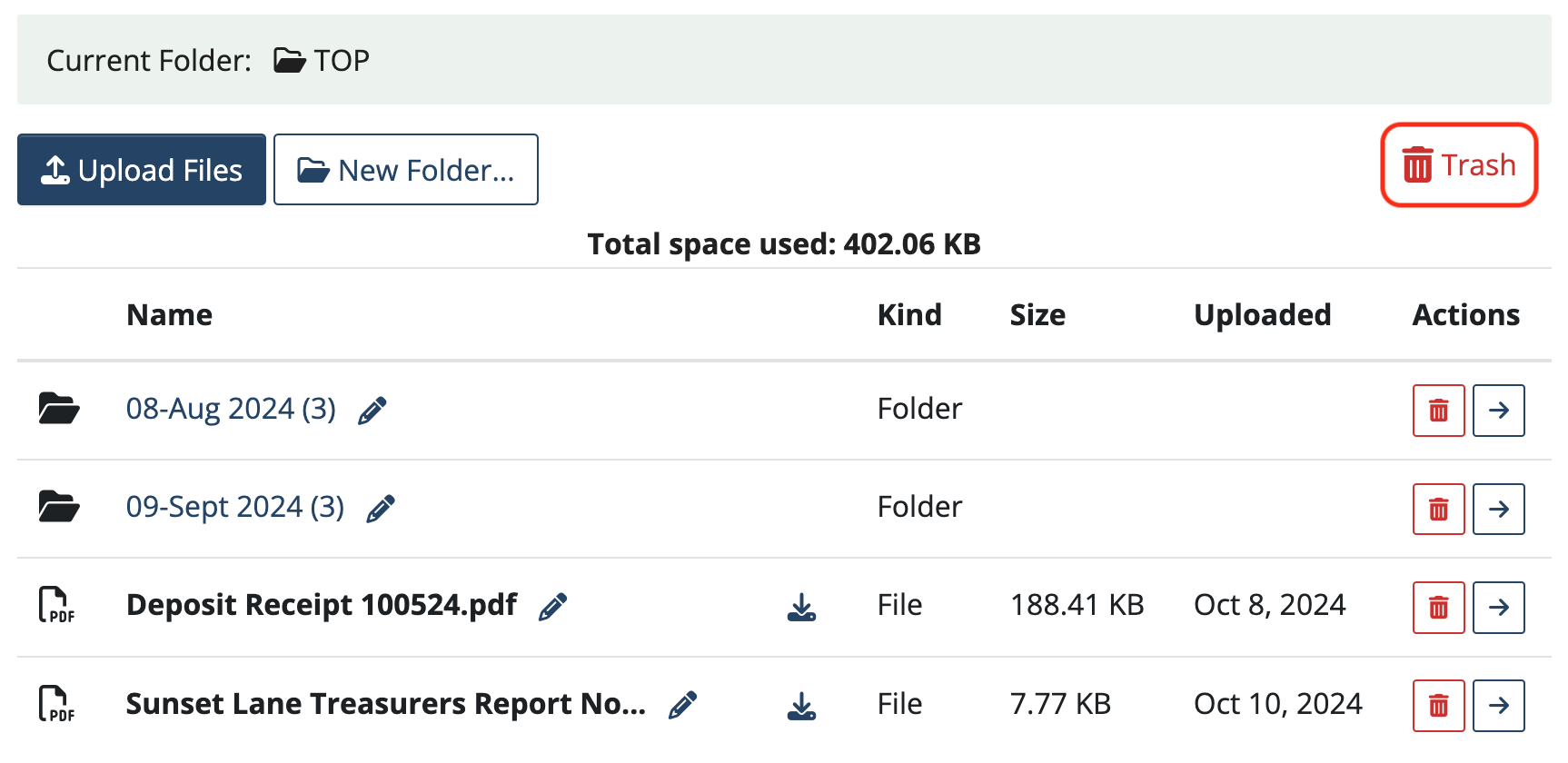
Click the red “x” to the right of an item to permanently delete it. Click Empty trash… to permanently delete all items in the Trash.