Key Takeaways
- Complete your year-end financial review before the new school year begins.
- Finish tax filings, and required financial reports on time.
- Organize receipts, bank statements, and other financial records for easy access.
- Prepare a smooth transition for incoming officers and treasurers.
- Update budgets, banking access, and financial procedures before fall fundraising starts.
PTO & PTA Treasurer Summer Checklist (2026): Year-End, Audit, Transition & All New Guides

As a busy parent volunteer, we know how busy the school year can be, and how quickly it can fly by. We hope you’re enjoying a well-deserved summer break filled with sunshine, relaxation, and quality time with loved ones. Savor those moments of bare feet, cold refreshments, and carefree days. All the good things!
So, what does a PTO or PTA Treasurer do in the summer?
While you’re soaking up these precious moments, it’s also a great time to tend to some of your PTO or PTA Treasurer duties that can help ensure a smooth start to the school year. A little preparation now can save you stress later, and who doesn’t want to star the school year feeling refreshed and organized?
Here’s a checklist to help you wrap up your previous year and prepare for the next year as Treasurer.
6 Steps to Wrapping Up Last Year
1. Finalize Finances
Ensure that all bills are paid, transactions are recorded and bank reconciliations are up-to-date for the entire year. This provides a solid financial foundation for the annual report and audit.
2. Annual Treasurer’s Report
One of the last responsibilities of an outgoing treasurer is the annual Treasurer’s Report, which is required by the National PTA (due August 1st) and highly recommended for non-affiliated parent groups.
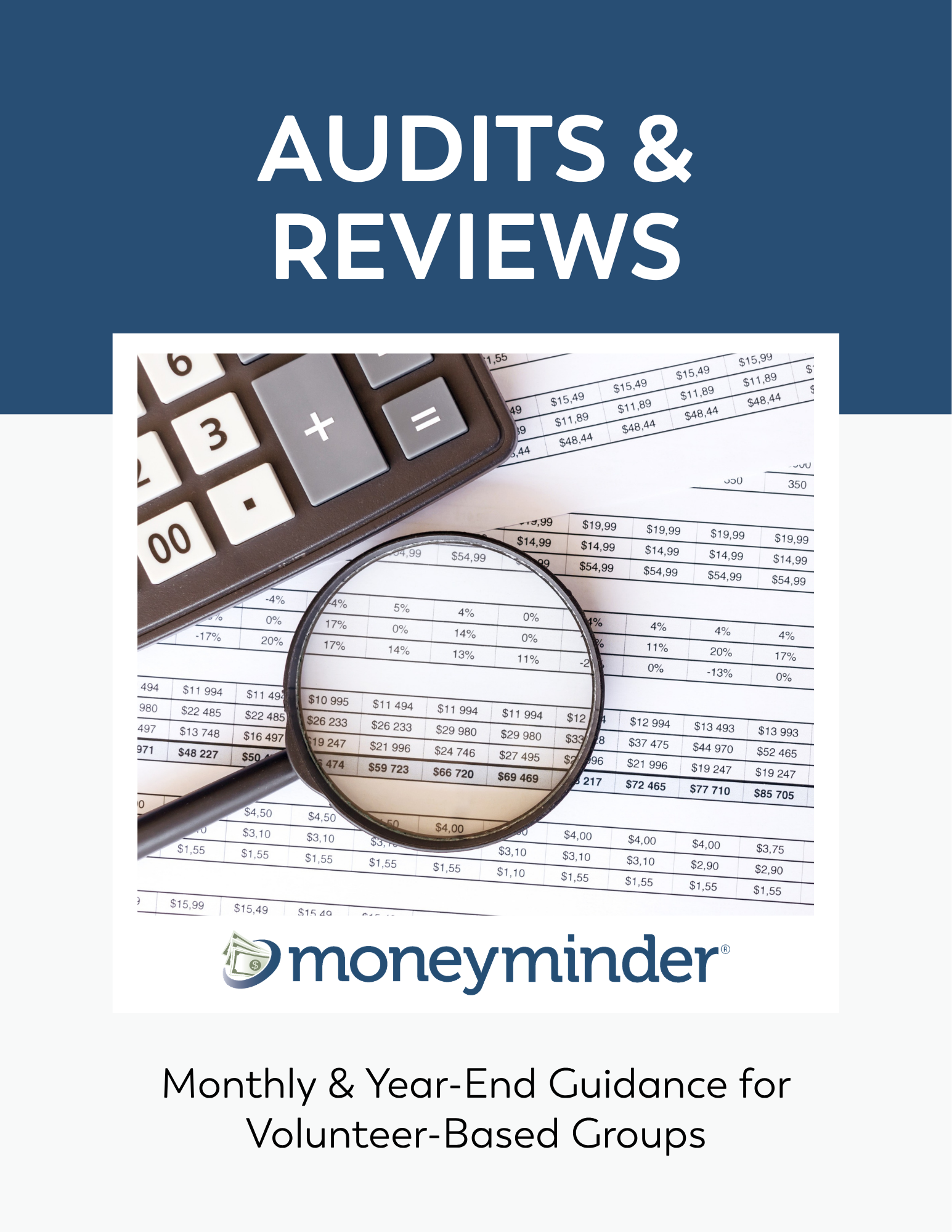
3. Conduct an Annual Audit or Financial Review
PTAs are required to conduct an annual audit at the end of each financial year or whenever there is a change in treasurer. For non-affiliated groups (i.e. PTOs), we highly recommend conducting one as well, as this helps to assess your group’s financial health and ensure accountability.
4. File Form 990
This annual tax form is required for all tax-exempt groups. The deadline for most PTOs and PTAs with a July 1 start date is November 15th, although filing can take place anytime after the financial year has ended. MoneyMinder customers can e-file their 990-N (e-Postcard) or 990-EZ within the app, and non-customers can e-file their 990-N as well.
- Form 990-N (gross receipts under $50,000)
- Form 990-EZ (gross receipts under $200,000 and total assets under $500,000)
- Form 990 (gross receipts greater than $200,000 and total assets above $500,000)
Learn more about nonprofit tax form 990.
5. Complete Your Treasurer Transition

If there’s a new treasurer in town, schedule a meeting to handover resources, share essential information and train them on any specifics of the role. Summer is often when new officers take over, making it the perfect time to ensure a seamless transition between outgoing and incoming treasurers. A well-organized handoff helps protect your group’s finances, reduces confusion, and sets the next treasurer up for success.
Before stepping down, gather and transfer all essential financial records, including:
- Insurance policies and state registration documents, if applicable
- Bank account information and signer authorization documents
- Login credentials for financial software and online banking platforms
- EIN and tax filing records
- Current budget and year-end financial reports
- Audit reports and supporting documentation
- Reimbursement procedures and outstanding payments
- Fundraising records and vendor contracts
6. Review Internal Financial Controls
Summer is an excellent time to evaluate your group’s financial policies and internal controls. Reviewing procedures before the new school year begins can help prevent errors, reduce risk, and ensure transparency for members and stakeholders.
- Two-signature policies
- Cash handling procedures
- Deposit verification
- Separation of duties
- Approval workflows
- Monthly reconciliation processes
- Reimbursement policies
- Documentation standards
5 Steps to Getting Set Up for Next Year
1. Get Organized
Check that paperwork is up to date and well-organized in your Daily Operations Binder, Critical Documents Binder and Treasurer’s Bin. Restock any banking supplies such as checks, deposit slips and endorsement stamps.
Learn about everything that is needed to get organized in our getting started guide.
2. Create Your Budget
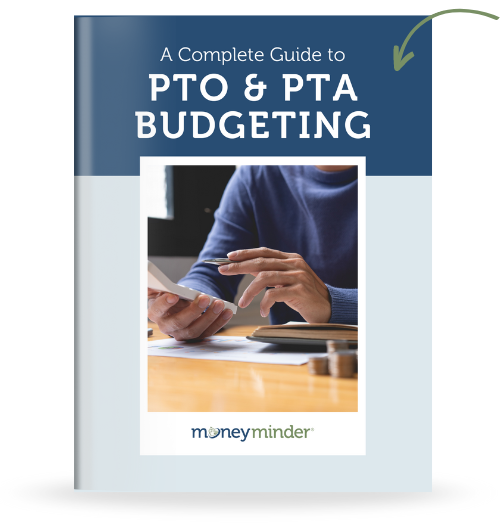
A well-crafted budget helps prioritize projects and financial decisions. It is the cornerstone for all small nonprofits, and most parent groups will create their budget between the end of last year and the beginning of the next.
Learn how to create a budget that works with our PTO and PTA Budgeting Guide.
3. Update Your Calendar
Start to plug key dates into your calendar and plan for the school year ahead. Having a shared PTO/PTA calendar with the school start date, holidays, school breaks and parent-teacher conferences can help ensure you are scheduling things like fundraisers and board meetings at optimal times.
Start to prepare for the first fall fundraiser. A little planning now can help your organization start the school year with confidence.
- Payment collection platforms
- Cash handling and deposit processes
- Volunteer acquisition and training
- Event reimbursement procedures
- Vendor contracts and payment schedules
4. Set Up Your New Year in MoneyMinder
Set up your new financial year to efficiently manage funds once money starts changing hands. Learn how to set up your new financial year in MoneyMinder.
5. Choose the Right Accounting System
If you aren’t already using MoneyMinder, it’s time to ditch the spreadsheets and manual, error-prone calculations. PTO/PTA-specific accounting software like MoneyMinder is designed to streamline your financial tasks efficiently, saving you time and reducing errors. Plus, our team of real humans is always ready to assist you along the way.
FAQs about a PTO Treasurer’s Summer Responsibilities
Summer is the ideal time for treasurers to wrap up the previous fiscal year and prepare for the next one. Key tasks include reconciling accounts, completing financial reports, organizing records, conducting an audit or financial review, filing any required tax forms, and preparing for leadership transitions.
Many PTAs require an annual audit or financial review as part of their bylaws, while PTOs often conduct one as a financial best practice. An annual audit helps verify that financial records are accurate, funds were used appropriately, and internal controls are working effectively. See the guide to PTO and PTA audits and financial reviews.
A successful treasurer transition involves transferring financial records, bank account information, login credentials, budgets, tax documents, audit reports, and important procedures. Scheduling a transition meeting can also help the incoming treasurer understand responsibilities and upcoming deadlines. See the guide to a smooth treasurer transition.
Organizations should retain bank statements, receipts, reimbursement forms, budgets, financial reports, audit documentation, tax filings, meeting minutes, and fundraising records. Maintaining organized records helps simplify audits, tax preparation, and leadership transitions. See the record-keeping rules.
Most tax-exempt PTOs and PTAs must file some version of Form 990 annually with the IRS. The filing deadline is generally the 15th day of the fifth month after the end of the organization’s fiscal year. The specific form required depends on the organization’s annual gross receipts and financial activity. Learn more about nonprofit tax forms.
Summer provides a natural break between school years, making it easier to review past performance, finalize records, create budgets, prepare for fundraising activities, and train incoming officers. Completing these tasks before school starts can help organizations begin the year organized and financially prepared.